A220 Order Nears: AirAsia Eyes Historic Fleet Pivot
By: FlySafe Research
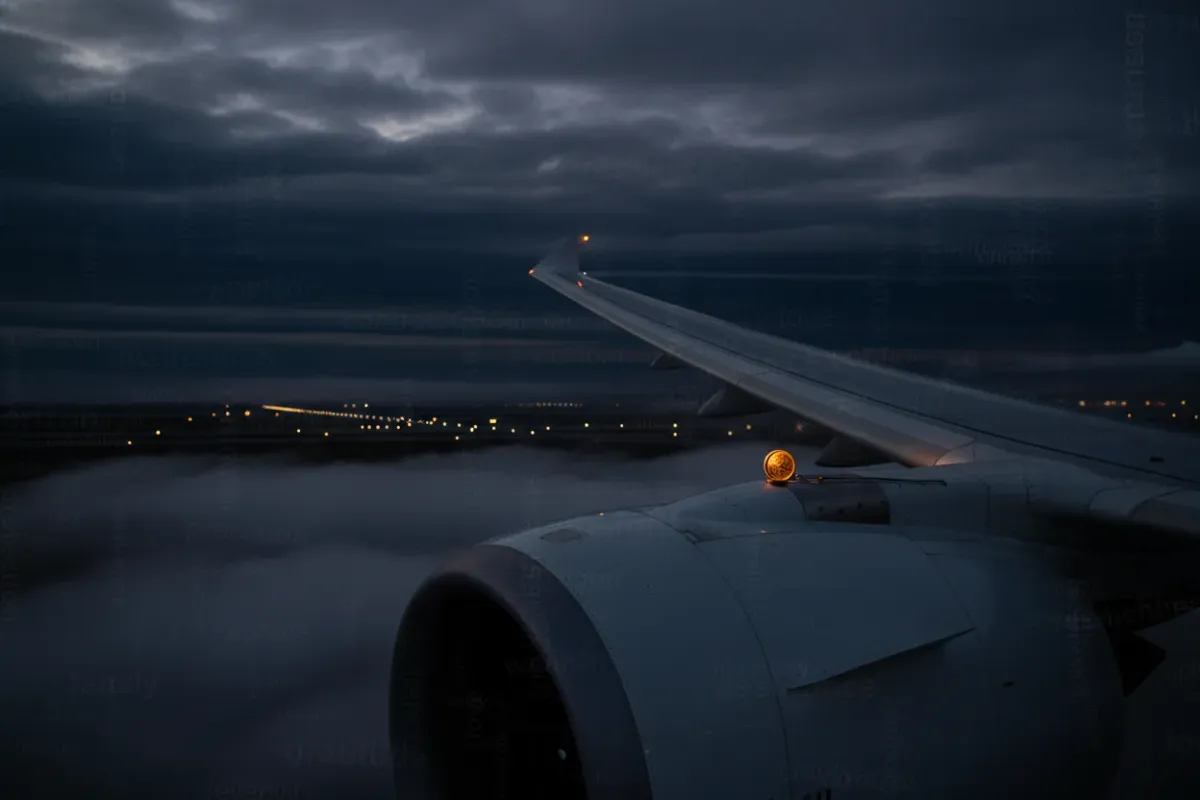
Airbus appears poised to secure one of the most significant A220 orders in the program's history, with AirAsia reportedly nearing a large-scale commitment to the narrowbody type. If confirmed, the deal would mark a notable strategic departure for the carrier — long associated almost exclusively with the A320 family — and would further cement the A220's position as a structurally important aircraft in global fleet planning. FlySafe analysis examines the operational, route-network, and supply-chain dimensions of this development.
The A220's Operational Position in 2026
The Airbus A220 has moved well beyond its early-adopter phase. As of April 2026, 501 aircraft have been delivered to customers worldwide, serving more than 1,900 routes and 500 destinations across 25 operators. Delta Air Lines leads the fleet with 85 aircraft, while airBaltic operates an all-A220 fleet of 55 A220-300s.
The type has achieved a dispatch reliability rate of 99.5 percent and has recorded zero hull losses since certification in 2016 — a safety record that few in-production narrowbody programs can match. According to Simple Flying, the A220 has achieved a "structurally dominant position in the 130 to 160 seat category," accumulating more than 800 deliveries across the program's lifetime and operating with over 30 airlines globally.
These figures describe an aircraft that has crossed the threshold from promising entrant to proven workhorse. For any carrier evaluating fleet renewal — particularly one operating in markets where right-sizing capacity is critical — the A220's track record now provides a substantial body of operational evidence.
Why the A220 Fits AirAsia's Evolving Network Strategy
AirAsia's fleet has historically been built around the Airbus A320 family, optimized for high-density, point-to-point routes across Southeast Asia. A shift toward the A220 would represent a fundamentally different approach to network design — one oriented toward thinner routes, secondary airports, and markets where a 180-seat A320neo carries more capacity than demand can sustain.
The economics support this logic. The A220 delivers approximately 25 percent better fuel efficiency than previous-generation narrowbody jets, according to industry data. JetBlue, which introduced the A220-300 into scheduled service in 2021, reported a nearly 30 percent lower direct operating cost per seat compared with its existing E190 fleet and a 40 percent reduction in fuel burn per seat. The aircraft's range of up to 3,350 nautical miles also opens route possibilities that older regional types cannot serve.
For AirAsia, which has signaled ambitions to expand into the Middle East — including a planned hub operation in Bahrain — the A220's combination of low trip cost and extended range is operationally significant. Thin routes connecting secondary cities in Southeast Asia to Gulf destinations, or linking smaller domestic markets that cannot support a full A320, become economically viable with the A220's cost structure. As noted by Simple Flying, the A220's main appeal lies in its "low overall trip cost, which becomes more important with longer segments."
European legacy carriers such as Air France, ITA Airways, and SWISS have already demonstrated this approach, operating the A220 on routes where "cost per trip is highly valued" and where operators "tend to prefer to right-size capacity" rather than fly larger aircraft at lower load factors. AirAsia's adoption of the type would extend this operational philosophy into the low-cost carrier segment — a relatively new frontier for the A220.
Production Realities and Delivery Timeline Risks
Any large A220 order must be evaluated against Airbus's well-documented production constraints. The A220 production line currently averages approximately six units per month, a rate that Airbus has publicly stated it intends to increase to roughly 14 units per month, with a target sometime in 2026. According to industry analysis, the program remains "highly unprofitable" at current production rates — a situation that higher volume is intended to address.
The gap between six and 14 monthly deliveries is considerable. Airbus is understood to be undertaking a significant restructuring of the A220 production line — a process that, once completed, is expected to support the higher rate and potentially introduce the designation A221 for the updated production configuration. Until that ramp-up is achieved, however, delivery slots remain constrained, and a large order from AirAsia would need to be sequenced alongside existing backlog commitments.
The engine supply chain adds another layer of complexity. The A220 is exclusively powered by the Pratt & Whitney PW1500G geared turbofan. While the A220's grounding rate related to engine issues sits at approximately 16 percent — notably better than the roughly 34 percent grounding rate affecting the Pratt & Whitney-powered A320neo fleet, as reported by industry sources — the PW1500G supply chain remains a factor that any prospective A220 customer must account for in fleet planning.
Recommendation: Airlines placing large A220 orders in the current environment should build delivery schedule buffers into fleet transition plans. Pratt & Whitney engine availability, while improving, continues to influence aircraft delivery and in-service rates across all GTF-powered programs.
Competitive Landscape: A220 Versus Alternatives
The A220 does not operate in a competitive vacuum. Embraer's E-Jet E2 family — particularly the E195-E2 — competes directly in the short-to-medium-haul segment suitable for smaller markets. Embraer has reached a book-to-bill ratio of 1.46 in recent quarters, indicating strong demand, and the E2 family has accumulated 489 firm orders. While modest compared with the nearly 20,000 combined orders for the A320neo and 737 MAX programs, the E2's order trajectory reflects genuine market appetite for aircraft in this segment.
Embraer has positioned the E195-E2 with claims of 22 percent lower trip costs than a 154-seat A320neo and 24 percent lower than a 160-seat 737-8. The E195-E2 offers up to 29 percent lower fuel burn compared with earlier-generation regional jets and a range of approximately 3,000 nautical miles — competitive, though short of the A220-300's 3,350-nautical-mile capability.
The competitive dynamic is instructive. As Forecast International noted, the shift by Airbus and Boeing toward larger, higher-margin models like the A321neo and 737 MAX 10 has "created an opportunity for Embraer to fill the small gap at the very bottom" of the narrowbody market. Both the A220 and E2 benefit from this trend, but they serve slightly different niches — the A220 skews toward the upper end of the 130-to-160-seat range with longer range capability, while the E2 occupies the lower-capacity segment more comfortably.
For AirAsia, the A220's selection over the E2 — if confirmed — would likely reflect the carrier's need for an aircraft that bridges the gap between true regional capacity and the A320's higher seat count, while offering range sufficient for medium-haul expansion into new markets.
Fleet Implications for Route Safety and Operations
FlySafe analysis shows that fleet diversification of this nature carries operational implications beyond pure economics. Introducing a new aircraft type into a single-type fleet requires investment in pilot training, maintenance infrastructure, spare parts inventory, and operational procedures. These are manageable challenges — dozens of carriers have integrated the A220 successfully — but they demand disciplined execution, particularly for a carrier operating at AirAsia's scale.
From a route-network perspective, the A220 enables operations into airports with shorter runways and lower infrastructure capacity — airports that the A320 may serve less efficiently or not at all. This expands the set of viable city-pairs but also introduces operational considerations around ground handling, navigation infrastructure, and aerodrome standards at secondary airports.
Airspace status: The A220's operational envelope supports operations across all standard FIR environments in Southeast Asia and the Middle East. No airspace restrictions specific to the A220 type are currently in effect. Carriers should monitor NOTAMs for any route-specific operational considerations when establishing new services to previously unserved destinations.
Affected routes: A220 deployment would most directly affect thin routes in ASEAN markets (including domestic Malaysian, Thai, and Indonesian sectors) and potential new medium-haul routes connecting Southeast Asia with the Gulf region.
The A220 also offers a cabin environment that has been well-received across existing operators. Wider seats in a 2-3 or 3-2 configuration, larger windows, and lower cabin altitude contribute to passenger comfort — a factor that, while not a safety consideration per se, influences load factors and therefore route economics on competitive sectors.
Market Signal and Industry Trajectory
If finalized, an AirAsia A220 order of significant scale would carry implications beyond the individual carrier. It would represent the most prominent adoption of the A220 by a pure low-cost carrier in Asia — a market segment where the type has had limited penetration to date. In 2025, Airbus secured 40 new A220 orders alongside more than 500 A320neo sales, demonstrating continued demand for both types.
The broader industry trend is clear: airlines across operating models — legacy, low-cost, and regional — are increasingly recognizing that fleet right-sizing, rather than uniform high-density operations, yields superior network economics. The A220, as Rob Dewar of Airbus described it when JetBlue entered service, was designed as "a truly innovative single-aisle aircraft." Its adoption across an expanding range of carrier types validates that design premise.
Recommendation: Based on publicly available NOTAMs and operational data, no fleet-type-specific restrictions affect the A220 in any current operational theater. Airlines evaluating the type should prioritize engine supply chain visibility and production slot availability in their acquisition timelines.
Key Takeaway
The anticipated AirAsia A220 order, if confirmed at the scale suggested by industry reporting, would mark a historic moment for both the carrier and the A220 program. It signals a strategic recognition that the 130-to-160-seat segment requires a purpose-built aircraft rather than a downsized derivative — and that the A220's operational economics, safety record, and route flexibility have matured to the point where even the largest low-cost carriers view it as a fleet cornerstone.
FlySafe will continue to monitor fleet transition developments and their implications for route operations and airspace utilization. Airlines have rerouted network strategies around fleet capability before; the A220's expanding role in global aviation represents one of the most consequential such shifts currently underway.
Analysis based on publicly available data only. FlySafe Research does not possess, access, or utilize any classified or non-public information. All data sources referenced are independently verifiable through the linked publications and public aviation records.
Frequently Asked Questions
Why is AirAsia considering the A220 when it has traditionally operated the A320 family?
The A220 addresses a different segment of AirAsia's potential network — thinner routes and secondary markets where the A320's higher seat count results in suboptimal load factors. The A220's approximately 25 percent better fuel efficiency and significantly lower trip cost make routes economically viable that an A320 cannot profitably serve. This complements rather than replaces the A320 fleet.
How does the A220 support AirAsia's reported Middle East expansion plans?
The A220-300's range of up to 3,350 nautical miles is sufficient to connect Southeast Asian markets with Gulf destinations. For a planned hub operation such as Bahrain, the A220 enables thin-route connectivity — linking secondary cities that do not generate enough demand for a full A320 — while keeping per-trip costs low enough to sustain new market development.
What delivery timeline challenges might AirAsia face with a large A220 order?
Current A220 production averages approximately six units per month, with Airbus targeting a ramp to 14 units monthly. This constrained production rate, combined with ongoing Pratt & Whitney GTF engine supply considerations, means delivery schedules for large orders may extend further than for equivalent A320neo commitments. Fleet transition planning should account for these factors.
What is the A220's safety and reliability record?
The A220 has achieved a dispatch reliability rate of 99.5 percent and has recorded zero hull losses since entering service following its 2016 certification. As of April 2026, 501 aircraft are in operation with 25 carriers worldwide, providing a substantial and favorable operational safety dataset.
- The A220 has crossed from promising entrant to proven workhorse: 501 deliveries, 99.5% dispatch reliability, and zero hull losses since 2016 certification — a safety and reliability record that few in-production narrowbody programs can match.
- A potential AirAsia A220 order would signal a strategic shift from high-density A320 operations toward right-sizing capacity on thinner routes, backed by hard economics: ~25% better fuel efficiency and ~30% lower direct operating cost per seat reported by early operators like JetBlue.
Powered by B1KEY
Want to know the risks before you fly?
FlySafe analyzes publicly available data to predict airspace closures 72 hours ahead. We're working with flight aggregators to bring this information directly to your booking experience.
Information is accurate as of the publication date. FlySafe uses exclusively publicly available data.