By: FlySafe Research
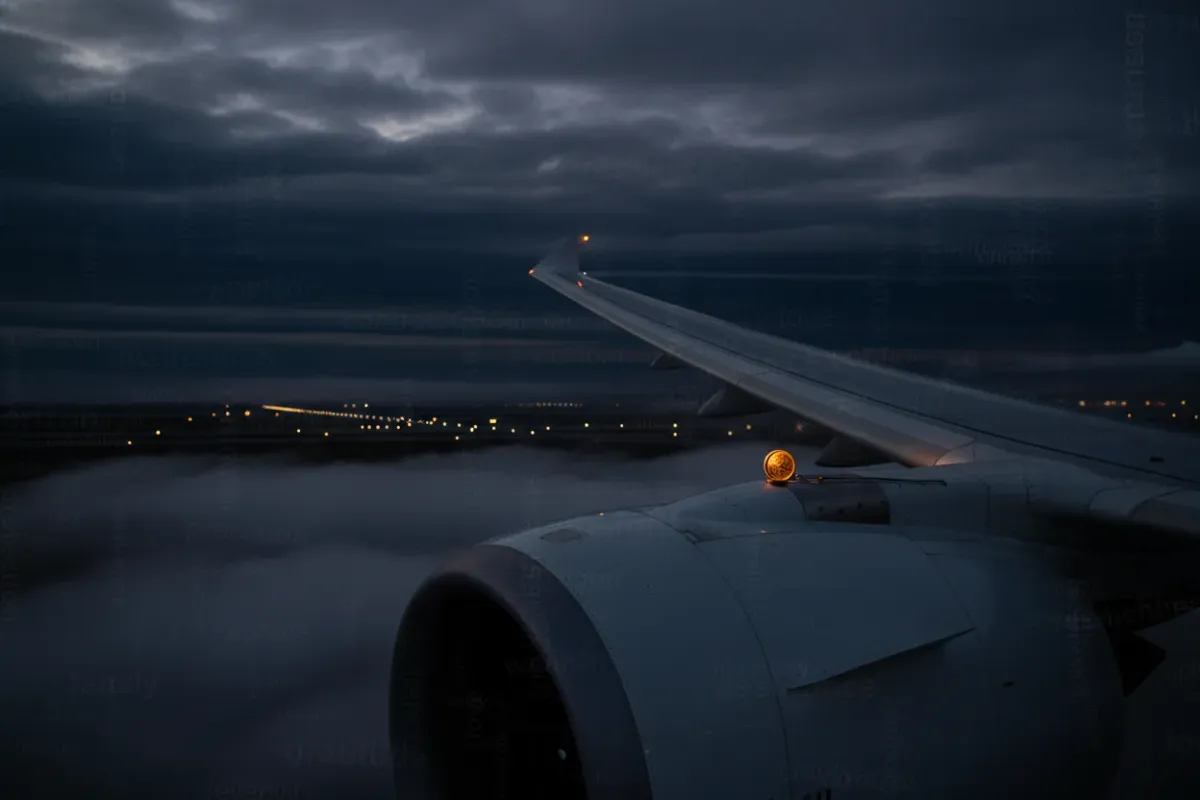
Delta Air Lines is making one of the most aggressive expansions into ultra-long-haul territory of any US carrier. In 2026, the airline is rolling out 10 new routes that push nonstop flight times toward the 17-hour mark — services that will traverse some of the world's most operationally complex airspace. FlySafe analysis shows that this expansion introduces new considerations for airspace routing, aircraft endurance, and crew duty regulations that merit close attention from the broader aviation community.
The move places Delta alongside Singapore Airlines, Qantas, and Qatar Airways in the exclusive tier of carriers operating routinely beyond 15 hours. It also signals that the Airbus A350, in both its -900 and -1000 variants, has become the defining platform for this class of operation.
Routes Confirmed for 2026
Several routes from Delta's ultra-long portfolio have been confirmed through OAG schedule filings and the airline's own announcements. According to Aerospace Global News, Delta's planned Atlanta to Riyadh service is expected to launch in late 2026, operated by the Airbus A350-1000 with a block time just short of the 15-hour mark. This represents Delta's inaugural scheduled service to Saudi Arabia and opens a new corridor between the southeastern United States and the Arabian Peninsula.
Additional ultra-long routes include services from New York JFK and Los Angeles to Seoul Incheon, as well as Atlanta to Delhi. Each of these routes involves block times well in excess of 14 hours, with certain seasonal return sectors — where headwinds and great circle routing diverge — pushing past 16 and even 17 hours.
The Los Angeles to Melbourne route, widely discussed in industry forums, represents another cornerstone of this expansion. Transpacific services to Australasia from the US West Coast involve some of the longest overwater segments in commercial aviation, crossing vast stretches of the Pacific with limited diversion options. Delta's Atlanta to Johannesburg service, operated with a 275-seat A350 configuration, is another route in this category — one that demands careful planning for high-altitude, high-temperature operations at O.R. Tambo International Airport.
Airspace status: All announced routes operate through airspace currently open to civil aviation. Based on publicly available NOTAMs, the corridors involved — including Middle Eastern FIRs for the Riyadh route and South/Southeast Asian FIRs for the Delhi and Seoul services — carry no blanket restrictions for commercial overflights at the time of publication.
The A350-1000: Engineered for Endurance
Delta's selection of the Airbus A350-1000 as its ultra-long-haul workhorse is not incidental. The A350 family represents the current state of the art in widebody efficiency. As noted by WIRED, modern ultra-long-haul aircraft like the A350 achieve their range through extensive use of lightweight carbon-fiber composite materials in the wings and fuselage, significantly reducing overall airframe weight compared to previous-generation aluminum designs.
The A350's wingspan exceeds 212 feet, and as a general principle, a longer wingspan on a twin-engine widebody translates into superior aerodynamic efficiency — the aircraft can sustain flight with less thrust over extended periods. The twin-engine configuration itself is central to the economics: operating two Rolls-Royce Trent XWB powerplants rather than four engines dramatically reduces fuel burn and maintenance costs per flight hour.
According to Jettly, the ultra-long-range variant of the A350-900 (the A350-900ULR) is currently the longest-range commercial airliner in service, capable of covering over 9,700 nautical miles and operating flights lasting up to 19 hours. This is achieved through enhanced fuel capacity — an additional 24,000 liters beyond the standard variant — combined with the lightweight composite construction and efficient powerplants. Singapore Airlines currently operates this variant on its New York to Singapore service, the world's longest scheduled route at approximately 9,527 miles.
Delta's A350-1000, while not the ULR subvariant, offers a comparable range envelope of approximately 8,700 nautical miles — sufficient for every route in the carrier's new ultra-long portfolio. The -1000 variant provides a wider fuselage cross-section and greater passenger capacity, which is commercially significant on routes where demand justifies a larger aircraft.
For the Riyadh service specifically, the A350-1000's range provides substantial fuel reserves beyond the minimum required. This margin is operationally important: it allows for rerouting around transient airspace restrictions, weather deviations, and holding patterns without triggering fuel emergency declarations.
Airspace and Routing Considerations
Ultra-long-haul routes inherently cross multiple Flight Information Regions, each with its own ATC procedures, language requirements, and potential operational restrictions. A single flight from Atlanta to Riyadh, for example, traverses North American domestic airspace, oceanic sectors over the North Atlantic, European FIRs, and Middle Eastern airspace — potentially crossing six or more national ATC boundaries.
Affected routes: The Delhi service from Atlanta overflies a corridor through European and Central/South Asian FIRs. The Seoul services from both JFK and LAX involve North Pacific oceanic tracks — routings that are adjusted daily based on jet stream position and wind patterns. The Melbourne service from Los Angeles crosses the entirety of the South Pacific, with diversion airports limited to island airfields in the mid-Pacific region.
FlySafe analysis shows that the key operational variable on many of these routes is not distance per se, but wind. The great circle distance from Los Angeles to Seoul is approximately 5,950 nautical miles, well within the A350-1000's range. However, seasonal jet stream patterns over the North Pacific can add 400 to 600 nautical miles of effective distance on westbound sectors, pushing block times from under 13 hours to over 15 hours. On eastbound returns, the same jet stream provides a tailwind that can reduce flight time by more than two hours.
This wind variability is precisely why block times on these routes can range from 13 to 17 hours depending on direction and season. Airlines build schedules around the longest reasonably expected block time, which is why the "17-hour" designation applies even when many individual flights complete well under that ceiling.
Recommendation: Passengers booking these ultra-long sectors should be aware that actual flight duration can vary significantly from published schedules. Westbound transpacific and eastbound transatlantic sectors tend to be longer; the reverse directions are generally shorter.
Crew Operations and Regulatory Framework
Flights exceeding 12 hours trigger augmented crew requirements under both FAA (14 CFR Part 117) and EASA regulations. For sectors approaching 17 hours, airlines typically operate with a double crew complement — four pilots rather than the standard two — with dedicated crew rest facilities onboard.
The A350's lower cabin altitude (equivalent to approximately 6,000 feet versus 8,000 feet on older-generation aircraft) and higher humidity levels are not merely passenger comfort features. They have measurable effects on crew fatigue mitigation, reducing the physiological stress of extended time at altitude. This is a non-trivial operational factor when crew members must remain alert and capable of managing emergencies for up to 17 consecutive hours of duty.
Delta's crew scheduling for these routes must also account for outstation rest requirements. At distant destinations like Melbourne or Johannesburg, layover durations, hotel proximity to the airport, and local conditions all factor into crew readiness for the return sector.
Industry Context: The Ultra-Long-Haul Expansion
Delta's expansion does not occur in isolation. The global airline industry is in the midst of a pronounced push toward ultra-long-haul operations, enabled by the range capabilities of the A350 and Boeing 787 families.
As reported by Flightradar24, Qantas' Project Sunrise will launch direct flights from Sydney to London and New York — sectors lasting nearly 20 hours and constituting the longest commercial flights ever scheduled. Qantas ordered 12 Airbus A350-1000ULR aircraft in May 2022, with the first delivery tentatively expected in October 2026. According to Aerospace Global News, these sectors will stretch well beyond 19 hours on specially configured A350-1000s.
Singapore Airlines continues to operate the world's longest route — New York JFK to Singapore Changi — at approximately 18 hours and 40 minutes. As noted by Simple Flying, the carrier filled 91.6% of its Seattle seats in the 12 months to January 2026, demonstrating strong demand for ultra-long-haul nonstop services from the United States.
Qatar Airways operates nonstop service from Doha to Auckland — a route with a return sector blocked at 17 hours and 10 minutes, according to Simple Flying. This service originally launched in 2017 with the Boeing 777-200LR.
United Airlines, Delta's principal domestic competitor, has taken a different approach to ultra-long itineraries. According to Simple Flying, United's longest offerings in 2026 reach up to 21 hours and 45 minutes — but these involve one-stop, same-plane services through intermediate hubs such as Tokyo Narita and Hong Kong, rather than true nonstop operations. Routes like Houston to Ulaanbaatar via Tokyo, or Los Angeles to Bangkok via Hong Kong, exploit fifth-freedom traffic rights but are not comparable in operational terms to Delta's nonstop sectors.
This distinction matters. A 17-hour nonstop flight and a 21-hour one-stop itinerary with an intermediate landing present fundamentally different operational profiles in terms of fuel planning, crew duty, and airspace exposure.
What This Means for the Network
Delta's ultra-long-haul expansion has several implications that extend beyond individual route performance.
First, the carrier is diversifying its long-haul network away from traditional transatlantic routes — historically the backbone of US carrier international operations — toward the Middle East, South Asia, East Asia, Africa, and Australasia. This geographic spread reduces concentration risk and exposes the airline's operations to a broader set of airspace and regulatory environments.
Second, the A350-1000's efficiency makes point-to-point ultra-long-haul services commercially viable on routes that could not sustain a larger aircraft like the Boeing 777-300ER. The 275-seat configuration used on routes such as Johannesburg reflects a deliberate trade-off: lower seat count in exchange for the range and fuel efficiency needed to make the route work at load factors that generate positive unit revenue.
Third, the seasonal variability on these routes is significant. Airlines have rerouted capacity on certain ultra-long-haul services based on seasonal demand patterns — reducing frequency from daily to five-weekly during off-peak periods, for instance. This flexibility is essential for maintaining economic viability on routes where load factors are sensitive to seasonal travel patterns and fare premiums.
Key Takeaways
Delta's 10 new ultra-long-haul routes represent a substantial strategic commitment to nonstop services that push toward 17 hours. The operational demands of these routes — spanning multiple FIRs, requiring augmented crews, and depending on modern widebody efficiency — are considerable. Analysis based on publicly available data only.
FlySafe will continue to monitor airspace conditions along these corridors. Travelers and aviation professionals seeking current airspace risk assessments for the FIRs traversed by these routes can consult FlySafe's regularly updated analyses.
Frequently Asked Questions
Why does Delta use a 275-seat A350 instead of a larger aircraft for the Johannesburg route?
High-altitude airports like Johannesburg's O.R. Tambo (elevation 5,558 feet) impose significant performance penalties on departing aircraft, particularly in hot weather. Thinner air reduces engine thrust and wing lift, which constrains maximum takeoff weight. A lower seat count allows the aircraft to carry sufficient fuel for the return sector while remaining within weight limits. The A350-1000's efficiency at reduced passenger loads makes this configuration commercially sustainable.
How do seasonal frequency changes affect pricing and availability on ultra-long routes?
When carriers reduce frequency from daily to five-weekly during off-peak seasons, total seat supply on the route decreases. This can maintain higher load factors and fare levels even as underlying demand softens. For passengers, fewer frequencies mean less scheduling flexibility and potentially higher fares during reduced-service periods. Booking in advance becomes more important on routes with limited weekly departures.
What physical strategies help passengers cope with 17-hour nonstop flights?
Hydration is the single most important factor — cabin humidity on the A350, while higher than older aircraft, still sits well below ground-level norms. Movement at regular intervals reduces the risk of deep vein thrombosis. Noise-canceling headphones, sleep aids timed to the destination time zone, and avoiding alcohol and caffeine in the final hours of flight are widely recommended by aviation medical professionals. The A350's lower cabin pressure altitude (approximately 6,000 feet equivalent) reduces physiological fatigue compared to older-generation widebodies.
How do airport conditions like high altitude and extreme heat constrain aircraft capacity on long-haul routes?
Aircraft performance is certified at specific combinations of altitude, temperature, and weight. At hot-and-high airports, the air is less dense, which means engines produce less thrust and wings generate less lift at any given speed. Airlines must reduce takeoff weight to maintain required climb gradients and obstacle clearance margins. On ultra-long routes, where fuel load is already near maximum, this typically means carrying fewer passengers or less cargo rather than reducing fuel.
Why would Delta launch LA-Melbourne when similar markets like LA-Hong Kong underperformed?
The Australian leisure and business travel market from the US West Coast has different demand characteristics than transpacific routes to East Asia. Melbourne draws strong point-to-point demand from the large Australian diaspora in the western United States, seasonal leisure traffic, and corporate travel in finance and technology sectors. Routes to Hong Kong faced distinct competitive and demand dynamics that do not necessarily transfer to the Australasian market. Route-level performance depends heavily on local demand drivers, competitive intensity, and fare premium sustainability.
- Delta's 2026 ultra-long-haul expansion — with routes like Atlanta–Riyadh, LAX–Melbourne, and Atlanta–Johannesburg — marks a rare move for a US carrier into the 15-17 hour tier previously dominated by Singapore Airlines, Qantas, and Qatar Airways.
- Seasonal asymmetry is a real operational factor: while outbound block times may be under 15 hours, return sectors on the same routes can exceed 16–17 hours due to headwinds and great circle routing divergence.
- The Airbus A350-1000 has become the defining platform for this class of operation, and Delta's deliberate selection of it — rather than the -900 variant — reflects the aircraft's specific endurance and efficiency advantages at these durations.
Powered by B1KEY
Live tools behind the analysis.
The signals FlySafe writes about are also published live — continuously verified by the Sentinel pipeline.
Information is accurate as of the publication date. FlySafe uses exclusively publicly available data.