By: FlySafe Research

A study published in December 2025, examining more than 30 years of NTSB accident data, concluded that the fatal accident rate tied to mechanical failures has not budged. Electrical system malfunctions remain a persistent contributor to this category. FlySafe analysis shows that understanding electrical failure management is not merely academic — it is a survival competency for flight crews operating in increasingly electrified cockpits.
This bulletin consolidates publicly available guidance from regulatory authorities and training organizations to provide flight crews with a structured approach to electrical anomalies encountered in flight.
Understanding Aircraft Electrical System Architecture
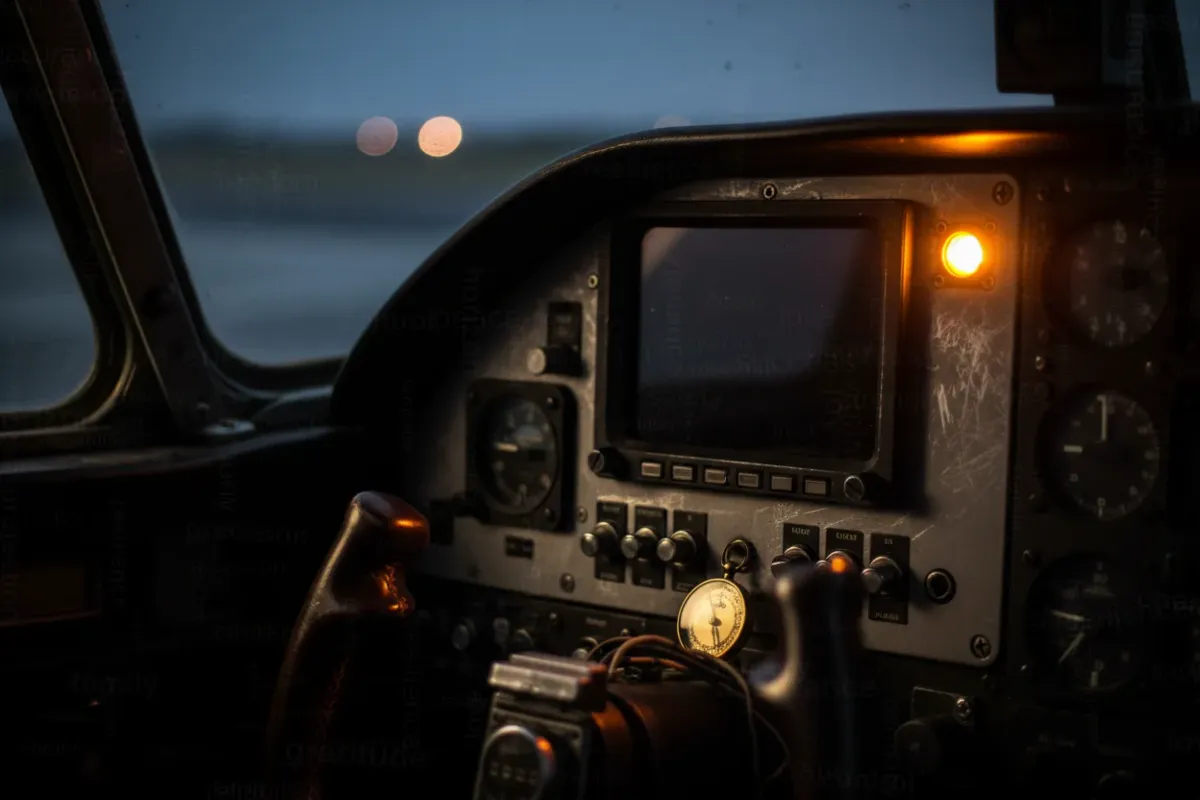
Before addressing failure management, a baseline understanding of electrical system architecture is essential. As described in practical training literature from Melbourne Flight Training, a bus bar functions as a distribution hub within the aircraft electrical system, safely directing electrical power from the alternator or battery to various systems including radios, avionics, lighting, and instruments.
The electrical system in most general aviation and transport category aircraft comprises several interdependent components: the engine-driven alternator or generator (primary power source), the battery (secondary and emergency power source), voltage regulators, bus bars, circuit breakers or fuses, and the wiring harnesses connecting all components.
Circuit breakers and fuses serve as the system's protective mechanisms. If excessive current attempts to flow through a wire or component, the fuse will blow or the breaker will trip, shutting down power to prevent damage or fire hazards. This protective function is critical context for understanding why arbitrary resetting of tripped breakers constitutes a significant risk.
Environmental factors also warrant consideration. As noted in the Airborne Sensor Operators Group guide, crews should be aware of environmental factors affecting the electrical system, such as temperature, humidity, and vibration. These variables can transform a latent wiring deficiency into an active fault, particularly during operations in turbulent conditions or extreme temperature environments.
The One-Reset Rule: FAA Guidance on Circuit Breaker Management
Perhaps the most critical piece of electrical failure guidance available to flight crews concerns circuit breaker management. The FAA's Advisory Circular AC 25-16 on Electrical Fault and Fire Prevention and Protection states explicitly that crews should make only one attempt to restore an automatically-disconnected power source or reset an automatically-disconnected circuit protection device that affects flight operations or safety.
This guidance is reinforced by Melbourne Flight Training's practical instruction: if a circuit breaker has tripped, reset it only one time. If it trips again, have the aircraft checked by a technician — the system may have a deeper issue requiring attention.
The rationale behind this rule is grounded in physics. A tripped circuit breaker indicates that current flow exceeded the rated capacity of the protected circuit. This may result from a short circuit, a ground fault, or component degradation. Resetting the breaker re-energizes the fault condition. Multiple reset attempts can escalate a contained electrical anomaly into an uncontained thermal event.
The FAA further notes that some electrical faults can result in the automatic disconnection of a power source, bus, or high-current load for which power cannot be restored without maintenance action. Such a disconnection could result in a serious latent failure of a flight control system component if the fault occurs in its vicinity. This underscores that a tripped breaker is not merely an inconvenience — it may be the only barrier between a contained fault and a cascading system failure.
Load Shedding: Conserving What Remains
When an electrical generation source is lost, the aircraft transitions to battery power. Battery capacity is finite, and every connected load accelerates depletion. According to the Aircraft Owners and Pilots Association (AOPA), load-shedding is a central part of all prime directives addressing electrical failures because it is essential in order to conserve battery power.
Recommendation: Flight crews should maintain familiarity with their aircraft's load-shedding hierarchy. Priority should be given to:
- Flight instruments necessary for aircraft control
- Communication equipment (at minimum one radio)
- Navigation equipment required for the current phase of flight
- All other systems shed in order of least operational necessity
The sequence of load shedding should be briefed and practiced during recurrent training, not improvised during an emergency. Airlines and operators typically publish load-shedding checklists specific to aircraft type, and these should be reviewed periodically.
Complete Electrical Failure: Night and IMC Considerations
The consequences of total electrical failure vary dramatically based on flight conditions. AOPA notes that with a complete electrical failure at night, there will be no way to turn on runway lights at uncontrolled fields, no landing lights, and no position lights to help other aircraft maintain visual separation.
This scenario demands pre-planning. Flight crews operating at night or in instrument meteorological conditions should consider:
- Backup lighting: Handheld flashlights or headlamps accessible without requiring electrical bus power
- Portable navigation: Battery-powered GPS units independent of the aircraft electrical system
- Communication alternatives: Awareness of nearby controlled fields where lighting is independently maintained, or familiarity with light gun signals for tower-controlled airports
- Transponder loss implications: ATC will lose secondary radar identification; crews should be aware of guidance provided to controllers for handling aircraft experiencing electrical failures
Airspace status: In controlled airspace, loss of transponder and radio requires crews to follow published lost-communications procedures. Familiarity with these procedures prior to flight is not optional — it is an operational necessity.
Diagnosing the Source: Systematic Troubleshooting in Flight
Not every electrical anomaly constitutes a total failure. AOPA identifies four possible causes of a lost-communications situation, listed in order of seriousness: the radio volume control set too low, the audio panel misset, the radio itself having failed, or the electrical system — or part of it — having failed.
This hierarchy illustrates a broader principle: systematic diagnosis should proceed from the simplest possibility to the most complex. As AeroTech Careers advises in its technical guidance, troubleshooting should begin with the simplest, least invasive tests, which can quickly identify the most common issues.
For flight crews, this translates to a structured approach:
- Verify the obvious — Volume settings, audio panel configuration, correct frequency selection
- Isolate the failure — Determine whether the issue is localized to one system or affects multiple buses
- Check ammeter and voltmeter — These instruments indicate whether the alternator is producing power and whether the battery is discharging
- Apply the one-reset rule — If a breaker has tripped, one reset attempt is permissible. A second trip confirms an active fault in that circuit
- Shed non-essential loads — Reduce demand on remaining power sources
The ASOG guide emphasizes that crews should start from the power source and work toward the load, testing components one by one to identify faulty elements. It further cautions that the goal is to avoid turning a minor problem into a major one — follow all caution, warning, and procedural notes associated with the aircraft systems.
Intermittent Faults: The Hidden Threat
Among the most insidious electrical problems are those that appear and disappear without pattern. As noted by Veryon, intermittent faults are notorious because they cannot be reproduced on demand, making conventional troubleshooting difficult.
Veryon further categorizes aircraft system failures into two broad categories that do not ground the aircraft: faults with which the aircraft can still fly, and recurrent faults that elude attempts to repair them. Both categories present distinct challenges for flight crews.
The key insight is that faults fixed quickly or pre-empted through early detection are not able to distract pilots in the cockpit. Conversely, when a grounding fault first appears during flight, it creates a distraction — and distraction in the cockpit environment is itself a safety hazard independent of the electrical fault's direct consequences.
Affected routes: Flight crews encountering intermittent electrical anomalies on a recurring basis should document each occurrence meticulously, including phase of flight, environmental conditions, and systems affected. This documentation enables maintenance personnel to identify patterns that individual events do not reveal.
Prevention: The Maintenance Connection
While in-flight management of electrical failures is the primary focus of this bulletin, prevention deserves mention. Melbourne Flight Training notes that frayed wires, corrosion, or loose connectors are common points of electrical trouble, and regular inspections are important for flight safety.
FAA guidance in AC 25-16 specifies that routing high-current cables in the vicinity of flight-critical components should be avoided. However, where adequate separation is impracticable, protection should be provided by an adequate barrier or conduit.
Chapter 11 of the FAA AC 43.13 standard requires that in no instance should wire be able to come closer than one-half inch to flight controls when light hand pressure is applied to wires or controls. During inspection, with power off, suspect aircraft electrical switches should be checked in the ON position for opens (high resistance) and in the OFF position for shorts (low resistance) using an ohmmeter.
Flight crews conducting preflight inspections should note any visible wiring anomalies, unusual odors suggesting overheated insulation, or circuit breakers found in a tripped state from a previous flight. These observations, when reported promptly, enable maintenance intervention before an in-flight event occurs.
The ASOG guide reinforces that all repairs and modifications must comply with aviation regulations, standards, and warranty requirements. Crew members should never attempt electrical repairs in flight beyond the published checklist procedures for their aircraft type.
Key Takeaways for Flight Crews
Based on publicly available NOTAMs, regulatory guidance, and industry training materials, the following principles represent the consensus approach to electrical failure management:
- Reset once, never twice. A tripped circuit breaker is communicating a fault condition. One reset is permissible; a second trip demands the circuit remain de-energized.
- Shed load immediately. Battery duration is the crew's operational envelope following generator failure. Every non-essential load shed extends available decision time.
- Diagnose systematically. Proceed from simple to complex. Most apparent electrical failures have mundane causes.
- Document intermittent faults. Patterns emerge from data, not from individual observations.
- Pre-plan for total failure. Night and IMC operations demand contingency planning for complete electrical loss before departure.
- Respect environmental factors. Temperature, humidity, and vibration transform latent faults into active failures.
FlySafe continues to monitor operational safety data across global aviation operations. Analysis based on publicly available data only. Flight crews are encouraged to maintain currency with their operator's specific electrical emergency procedures, as aircraft-type-specific guidance always supersedes general principles.
Frequently Asked Questions
When should a tripped circuit breaker be reset versus left alone?
FAA Advisory Circular 25-16 permits one reset attempt for a tripped circuit breaker that affects flight operations or safety. If the breaker trips a second time, it must remain in the tripped position for the remainder of the flight, as it indicates an active fault that could escalate if re-energized.
How can a flight crew identify an electrical fire versus other onboard fire sources?
Electrical fires typically produce a distinctive acrid odor from burning wire insulation, often accompanied by visible smoke from behind instrument panels or near wiring bundles. Unlike hydraulic or fuel-fed fires, electrical fires may be preceded by flickering instruments or tripped circuit breakers, providing an early warning that a thermal event is developing in a specific circuit.
Can an engine continue running if the entire electrical system fails?
In most piston-engine general aviation aircraft with magneto ignition systems, the engine will continue to operate normally following a complete electrical failure, as magnetos generate their own electrical energy independently. Fuel-injected engines with electronic engine controls (FADEC-equipped turbines, for example) have different dependencies and typically incorporate redundant electrical sources for this reason.
What causes rapid battery drain even when the alternator appears to be functioning?
This condition often indicates a voltage regulator malfunction allowing the alternator to produce insufficient charging current despite appearing operational on cockpit gauges. It may also result from a parasitic draw — a short circuit or grounded wire downstream of the ammeter that consumes current without being reflected in normal instrument readings. Maintenance inspection of the charging circuit is required.
Why is load shedding prioritized so heavily in electrical emergency procedures?
Battery capacity in most light aircraft provides between 30 and 60 minutes of power under full electrical load. Load shedding can extend this to several hours by eliminating non-essential consumers, directly expanding the crew's options for diversion, communication, and safe landing. Every minute of additional battery life represents additional decision-making time.
- A 30-year NTSB dataset shows the fatal accident rate from mechanical and electrical failures has not improved, meaning electrical failure management is a survival skill, not optional knowledge.
- The FAA's AC 25-16 permits only one attempt to reset a tripped circuit breaker — resetting a breaker that tripped due to a real fault risks fire or wire damage, not just a nuisance interruption.
- Environmental conditions — temperature, humidity, and vibration — can activate latent wiring faults, meaning a system that checks out on the ground can fail in turbulence or at altitude.
Powered by B1KEY
Live tools behind the analysis.
The signals FlySafe writes about are also published live — continuously verified by the Sentinel pipeline.
Information is accurate as of the publication date. FlySafe uses exclusively publicly available data.