By: FlySafe Research
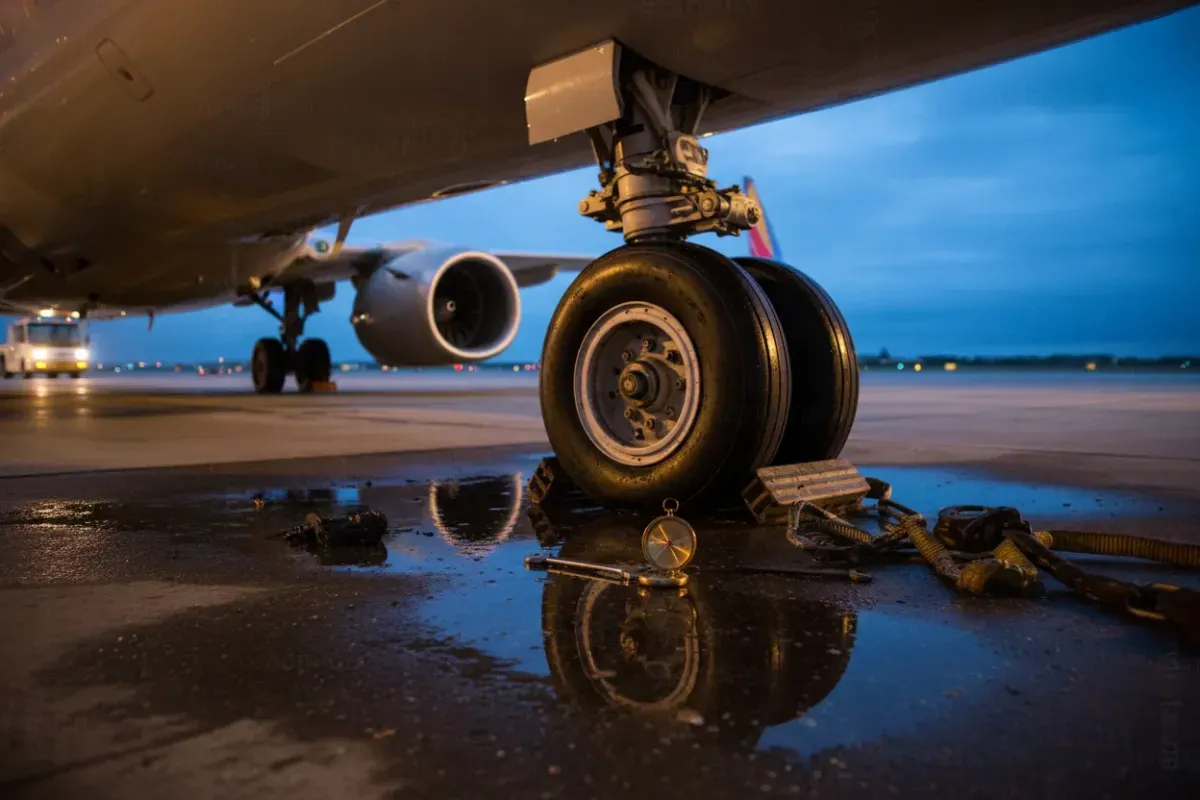
On January 27, 2026, Southwest Airlines launched one of the most significant operational shifts in its 53-year history: assigned seating and checked baggage fees. Barely two months later, the carrier reversed course on seating, announcing a return to the open boarding model that had defined the airline since its founding. The checked bag fees, however, remain in place. FlySafe analysis examines the operational and passenger-experience implications of this reversal, and what it signals about the broader airline industry's evolving approach to cabin configuration and ancillary revenue.
The Timeline of a Rapid Reversal
Southwest Airlines had spent decades resisting the assigned-seat model used by virtually every other major U.S. carrier. The airline's signature boarding process — groups A, B, and C with passengers selecting their own seats upon boarding — was more than a quirk. It was a core brand differentiator, one that enabled faster turnaround times at the gate and simplified the operational logistics of managing seat inventory.
The January 2026 shift to assigned seating, which included the introduction of "premium" and "preferred" seat categories, was driven by internal market research reportedly showing that approximately 80% of surveyed customers preferred assigned seats. The change aligned Southwest with industry-wide trends toward monetizing seat selection, a revenue stream that has grown substantially across the sector in recent years.
Yet by early April 2026, Southwest confirmed it would revert to open seating. The reasons cited publicly centered on operational efficiency and customer feedback collected after implementation. The speed of the reversal — roughly eight weeks — suggests the friction introduced by assigned seating created measurable disruptions to the airline's tightly optimized boarding and turnaround processes.
Operational Realities Behind the Decision
Southwest's operational model has historically depended on rapid gate turnarounds. Open seating supports this by eliminating bottlenecks caused by passengers searching for specific rows, waiting for overhead bin space near their assigned seat, or attempting to swap assignments at the gate. These efficiencies compound across hundreds of daily flights.
The aviation industry at large continues to grapple with operational challenges. As noted by OAG, nearly 47% of aviation delays can be traced to fragmented workflows caused by disconnected legacy systems among airlines, airports, ground handlers, and air traffic control. Adding a new layer of seat-assignment logistics to an airline that had never managed one at scale introduced complexity into a system already under pressure.
PionAirLaw has highlighted that exponential growth in passenger demand has intensified challenges for airlines, requiring increased operational capacity while contending with airport infrastructure saturation and air traffic control limitations. In this environment, any operational change that slows boarding or extends gate time carries a direct cost measured in delayed departures, missed connections, and reduced aircraft utilization.
Southwest's reversal can be read as a pragmatic acknowledgment that the operational costs of assigned seating outweighed the projected ancillary revenue gains — at least within the airline's particular network structure and turnaround model.
The Ancillary Revenue Equation
The broader context for Southwest's initial decision is clear. Ancillary revenue has become an essential pillar of airline profitability worldwide. According to Executive Travel, airlines globally generated over $148 billion in ancillary revenue in 2024, a record high driven by fees for baggage, seat selection, and priority boarding. OAG reports that ancillary services, including seat selection, now account for over 15% of total revenues for airlines, with low-cost carriers being the most dependent on these income streams.
The financial pressure on Southwest was substantial. As reported by AltexSoft, in 2024, U.S. airlines collectively earned a record $7.27 billion from checked baggage fees alone, with American, Delta, and United each surpassing $1 billion individually. Southwest, after half a century, retired its iconic "Bags Fly Free" policy under mounting investor pressure, marking it as the last major U.S. carrier to hold out on such fees.
A Senate report found that from 2018 to 2023, five major and low-cost airlines brought in $12.4 billion in revenue from seat fees. Combined seat fee revenue for those carriers increased by 50%, from $2 billion in 2018 to $3 billion in 2023. At Delta and Frontier, seat fee revenue more than doubled during that period. As noted by Fast Company, investigators pointed to tactics such as dynamic pricing and interface design patterns intended to maximize seat-fee uptake.
Southwest's reversal on seating does not mean the airline is abandoning ancillary revenue. The checked baggage fees introduced in January 2026 remain in effect. The airline appears to be recalibrating which ancillary streams are compatible with its operational DNA and which introduce unacceptable friction.
What Stays and What Changes
Several elements of the January 2026 restructuring remain intact despite the seating reversal:
Checked baggage fees remain. Southwest's decision to end its longstanding free checked bags policy is unchanged. This aligns the carrier with every other major U.S. airline and unlocks a revenue stream worth potentially hundreds of millions annually, based on industry benchmarks.
EarlyBird Check-In gains importance. With the return to open seating, the EarlyBird Check-In product — which gives passengers an earlier boarding position for a fee — becomes the primary mechanism for travelers seeking to secure preferred seats. Demand for this product is expected to increase, and pricing adjustments would not be surprising.
Extra legroom seating remains uncertain. Southwest had introduced premium and preferred seat categories as part of the assigned-seating rollout. How these categories will function within an open-seating framework has not been fully detailed. One possibility is a model where extra-legroom rows are reserved for passengers who pay a premium, with those passengers boarding in early groups.
Refund obligations for prepaid seat assignments. Passengers who purchased assigned seats for flights that will now operate under open seating are entitled to refunds or credits. The specifics of this process will depend on Southwest's published policies and applicable consumer protection regulations.
Industry Implications
Southwest's experiment and rapid reversal offers a case study in the tension between ancillary revenue maximization and operational identity. The airline industry has broadly moved toward unbundling — separating the base fare from services that were once included — and this trend shows no signs of reversing. Frontier Airlines, for example, derived 62% of its total revenue from ancillary sources in 2024, according to Executive Travel, meaning that for every $100 base fare, travelers paid an additional $161 in fees.
However, Southwest's experience suggests that not every ancillary model fits every carrier. The airline's point-to-point network, rapid turnaround strategy, and single-aircraft-type fleet create an operational ecosystem where certain changes — even ones that generate revenue at competitors — can introduce disproportionate disruption.
Technology continues to reshape how airlines approach these tradeoffs. As noted by Northeastern University's D'Amore-McKim School of Business, innovations such as dynamic pricing, route optimization, and biometric technology are enabling quicker boarding processes and real-time fare adjustments. These tools may eventually allow carriers like Southwest to introduce seat-based revenue products without the operational penalties experienced in early 2026.
For now, the reversal is a reminder that airline operations are complex, interconnected systems. A change to one variable — seating policy — cascades through boarding times, gate utilization, crew scheduling, and customer satisfaction in ways that market research alone may not fully predict.
Key Takeaways for Travelers
Passengers flying Southwest should note the following practical changes:
- Open seating is back. The familiar A/B/C boarding group process returns. Boarding position determines seat access.
- Bags are no longer free. Checked baggage fees remain, regardless of the seating reversal. Only elite-tier frequent flyers retain complimentary checked bags.
- EarlyBird Check-In matters more. For travelers who want aisle, window, or front-of-cabin seats, purchasing EarlyBird or checking in at the earliest possible moment is now the primary strategy.
- Watch for refund communications. Passengers who prepaid for assigned seats on affected flights should monitor their booking for refund or credit information.
FlySafe analysis shows that this reversal, while notable, does not alter the fundamental trajectory of the airline industry toward greater fee-based revenue structures. What it does demonstrate is that implementation matters as much as strategy — and that operational heritage is not easily overridden by revenue projections alone.
Analysis based on publicly available data only.
Frequently Asked Questions
Why did Southwest revert to open seating after just two months when market research showed 80% of customers preferred assigned seats?
Survey preferences and real-world operational outcomes do not always align. While customer surveys indicated a preference for assigned seating, the implementation introduced operational friction — particularly around boarding times and gate turnarounds — that appears to have outweighed the projected revenue benefits. Southwest's network model depends on rapid turnarounds in ways that differ from hub-and-spoke carriers.
How will extra legroom seats be handled under the return to open seating?
Southwest has not fully detailed the mechanics, but the most likely approach involves reserving extra-legroom rows for passengers who purchase a premium product, with those travelers boarding in an early group. This would mirror the existing EarlyBird Check-In model while adding a seat-category overlay.
Will EarlyBird Check-In prices increase now that it is the primary way to guarantee a good seat?
No official pricing changes have been announced, but increased demand for favorable boarding positions under open seating makes a price adjustment a reasonable commercial consideration. Travelers should monitor Southwest's booking platform for any updates.
Are checked bag fees remaining even though open seating is returning?
Yes. The baggage fee policy introduced in January 2026 is unaffected by the seating reversal. Southwest now charges for checked bags on all but its highest-tier loyalty bookings, consistent with the rest of the U.S. airline industry.
What refunds or compensation do customers who prepaid for assigned seats receive?
Passengers who purchased assigned seats for flights that will now operate under open boarding are entitled to refunds or equivalent travel credits. Southwest's customer service and booking management tools should provide details specific to each affected reservation.
- Southwest's open seating model is a core operational advantage, enabling faster gate turnarounds by eliminating bottlenecks from passengers searching for specific assigned seats or swapping seats at the gate.
- The airline reversed its assigned seating policy after just two months because the new system created measurable operational disruptions and friction that undermined its tightly optimized boarding process.
- Southwest will retain its newly introduced checked baggage fees, indicating that ancillary revenue remains a priority even as it retreats from monetizing seat selection.
Powered by B1KEY
Live tools behind the analysis.
The signals FlySafe writes about are also published live — continuously verified by the Sentinel pipeline.
Information is accurate as of the publication date. FlySafe uses exclusively publicly available data.