By: FlySafe Research
FAA's $4 Billion Budget Request: A Critical Infusion for ATC Modernization
The White House's Fiscal Year 2027 budget proposal includes a significant request for the Federal Aviation Administration: an additional $4.0 billion for its Facilities and Equipment (F&E) account. This funding, as detailed in the official budget submission, is intended to sustain safety and advance modernization for a "resilient, efficient, and future-ready NAS" [National Airspace System]. This request represents a pivotal step in addressing a long-standing infrastructure deficit within U.S. air traffic control. FlySafe Research analysis, based exclusively on publicly available budget documents and legislative texts, indicates this funding is structured to accelerate specific, tangible upgrades to core ATC systems that have direct implications for airspace efficiency and safety redundancy.
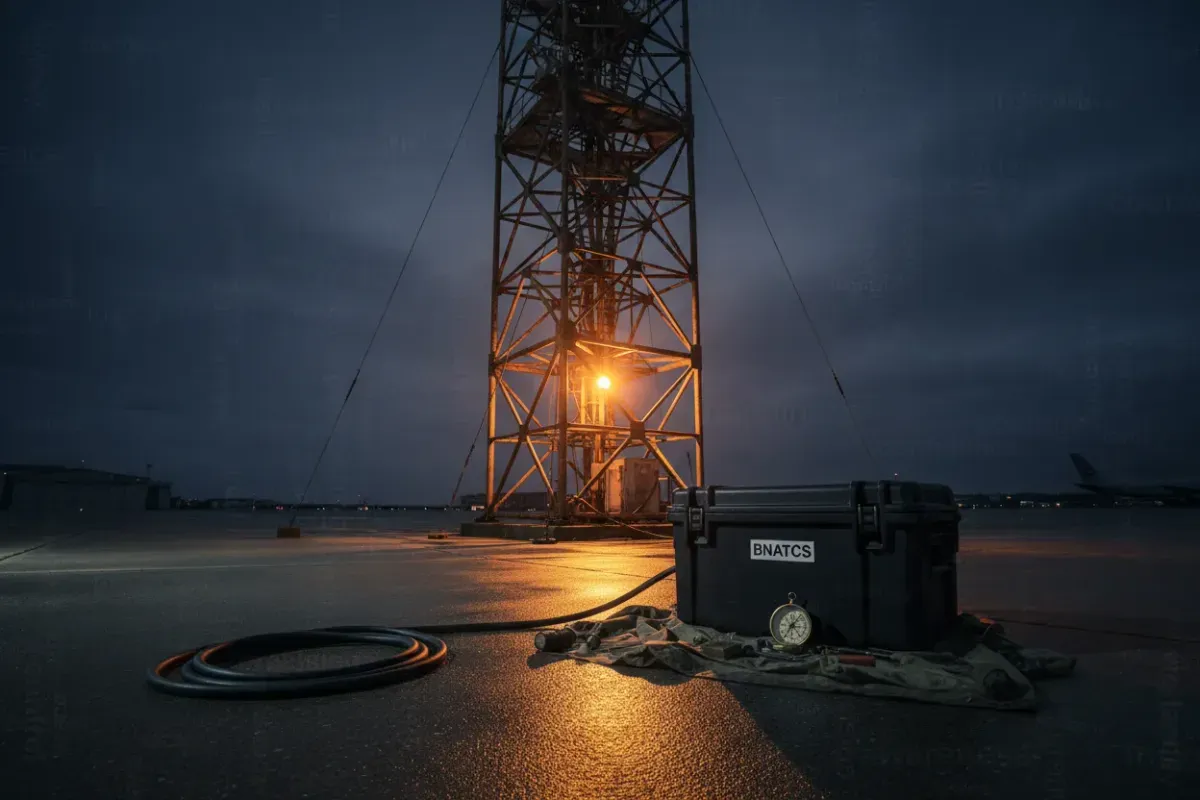
The context for this request is a multi-billion dollar modernization effort already underway. According to the budget documents, this $4.0 billion request includes $1.5 billion specifically to augment the $12.5 billion allocated for the "Brand New Air Traffic Control System" (BNATCS) under prior legislation. Furthermore, this follows a consistent pattern of increased congressional attention to ATC infrastructure, exemplified by the $5 billion provided by the Infrastructure Investment and Jobs Act (IIJA), allocated at $1 billion per year over five years as a "down payment to reduce our backlog of needed maintenance, updates, upgrades and replacement of critical buildings and equipment" [Source 4].
Core Modernization Targets: Replacing Failing Legacy Systems
The proposed FY27 funding is not for abstract research but for deploying specific hardware and software across the National Airspace System. Based on the budget request and supporting documentation, the modernization work is concentrated on five critical areas: communication, automation systems, surveillance, Alaska Airspace, and facilities [Source 2]. The explicit goal is to replace "outdated and failing technologies" that pose increasing reliability risks.
Concrete equipment upgrades funded by this request would be substantial. According to analysis of the proposal, planned deployments by 2028 include the installation of 27,625 new radios, 462 digital voice switches, and 110 weather stations in Alaska [Source 1]. These are not incremental improvements but wholesale replacements of core components. For instance, modern digital voice switches enhance clarity and reduce errors in controller-pilot communications, a fundamental safety interface. The Alaska weather station expansion directly addresses a known gap in surveillance and weather data for a vast and operationally challenging region.
This equipment push aligns with broader technological upgrades already in procurement. As noted in prior reporting, the FAA is actively working on systems that add a time element to existing 3-D tracking, allowing controllers to know "not only more precisely where an aircraft is, but also when a plane is meant to arrive at a given point" [Source 5]. Such capabilities are foundational for managing complex traffic flows and optimizing routes for efficiency and fuel savings.
Workforce and Facility Expansion: Building Future Capacity
A modernized physical and technological system requires a correspondingly robust workforce. The FY27 budget request directly links funding to a hiring surge targeting 8,900 new air traffic controllers by 2028 [Source 1]. This initiative is critical, as advanced automation and decision-support tools are force multipliers for controllers, not replacements. Adequate staffing levels are required to manage current traffic volumes, train new hires, and fully utilize new systems. This hiring goal is part of a sustained effort, as seen in other legislative proposals, such as a separate transportation bill that would designate funds to hire approximately 2,500 new controllers [Source 3].
Perhaps the most symbolic infrastructure project supported by this budget is the construction of the first new consolidated Air Route Traffic Control Center (ARTCC) since the 1960s [Source 1]. ARTCCs manage en-route traffic at high altitudes across the country. Building a new center represents a long-term investment in a physical facility designed around modern technology, cybersecurity standards, and human factors engineering, moving away from adapting decades-old buildings. This project, alongside the nationwide equipment refresh, underscores the scale of the modernization backlog.
Funding Mechanisms and Trade-offs
Major budgetary initiatives often involve reallocations, and the FAA's request is no exception. To partially offset the costs of these upgrades, the FY27 budget proposes a $372 million reduction to the Essential Air Service (EAS) program [Source 1]. The EAS program subsidizes air service to rural communities. This proposed cut highlights the budgetary trade-offs and political challenges inherent in funding large-scale infrastructure modernization. The final appropriation will be determined by Congress, which has historically shown strong bipartisan support for ATC modernization core programs while also protecting community air service.
The funding landscape is a patchwork of multi-year commitments. The BNATCS initiative has a $12.5 billion foundation from the Working Families Tax Cut Act. The IIJA provides a steady $1 billion annual stream for five years. The FY27 request, and others like a proposed $4 billion for facilities and equipment in a related 2026 transportation bill [Source 3], represent additional capital injections to accelerate pace and scope. This layered funding approach suggests a recognition that the scale of the ATC modernization challenge requires sustained, multi-administration financial commitment.
Operational Implications for Airlines and Pilots
For aviation operators, the successful deployment of these upgrades promises tangible benefits, though the transition period requires management. Airspace status and affected routes during hardware cutovers and software deployments will be managed via NOTAMs (Notices to Airmen). Pilots and dispatchers should anticipate increased scrutiny of NOTAMs related to communications, navigation, and surveillance (CNS) outages or limitations as work proceeds.
Recommendation: Operators should ensure their flight planning and operational control departments are prepared to adjust for temporary service degradations. However, the end state is a more resilient network. The deployment of thousands of new radios and switches should reduce the frequency and scope of communication failures. The enhanced weather data, particularly from Alaska and from proposed modernized weather imaging systems [Source 5], will provide controllers and pilots with better tools for strategic routing around convective weather, potentially reducing delays and cancellations.
Airlines have rerouted and absorbed delays for decades due to limitations in legacy ATC systems, especially during severe weather events. A modernized system with improved traffic management tools and controller decision support is designed to increase the throughput of congested airspace during such events and allow for more efficient routing under normal conditions. The move toward time-based metering and 4-dimensional trajectory management will enable more efficient climbs, cruise segments, and descents, contributing to fuel savings and reduced emissions.
Key Takeaways and FlySafe Perspective
The $4 billion FY27 budget request is a significant marker in the long-term effort to replace the foundational infrastructure of U.S. air traffic control. FlySafe analysis shows this funding is targeted at discrete, deployable technologies and human resources. The focus on radios, switches, surveillance, and a new ARTCC indicates a procurement and construction phase is being prioritized.
The ultimate impact on the National Airspace System will be measured in increased resilience, reduced unscheduled outages of critical equipment, and enhanced tools for managing complex traffic flows. For the flying public, this translates to a foundation for greater schedule reliability and safety. For industry professionals, it underscores the ongoing transition from mid-20th century technology to a system capable of supporting future growth and innovation.
Analysis based on publicly available data only. FlySafe Research monitors aviation infrastructure developments as a key component of systemic risk intelligence, recognizing that the integrity of the ATC system is a primary factor in the safety and efficiency of all flight operations. The progression of these modernization projects, as reflected in public budgets, NOTAMs, and FAA advisories, will continue to be a critical area of objective monitoring.
Sources:
- FAA Could Get $4B for ATC Upgrades in 2027 Budget - Flying Magazine
- FY 2027 President's Budget Submission for Federal Aviation Administration
- Modern Skies Coalition Backs Transportation Bill - FLYING Magazine
- Infrastructure Investment and Jobs Act - Air Traffic Facilities
- FAA Awards $4.4 Billion For Air Traffic System - InformationWeek
- The $4 billion budget request includes $1.5 billion specifically to augment the $12.5 billion already allocated for the 'Brand New Air Traffic Control System' (BNATCS), indicating a major acceleration of a pre-existing, multi-billion dollar replacement program.
- The funding targets concrete hardware deployments by 2028, including 27,625 new radios, 462 digital voice switches, and 110 weather stations in Alaska, representing a wholesale replacement of core, failing components.
- A key goal is replacing 'outdated and failing technologies' that pose increasing reliability risks, with specific focus on communication, automation, surveillance, and Alaska Airspace systems.
Powered by B1KEY
Live tools behind the analysis.
The signals FlySafe writes about are also published live — continuously verified by the Sentinel pipeline.
Information is accurate as of the publication date. FlySafe uses exclusively publicly available data.