By: FlySafe Research
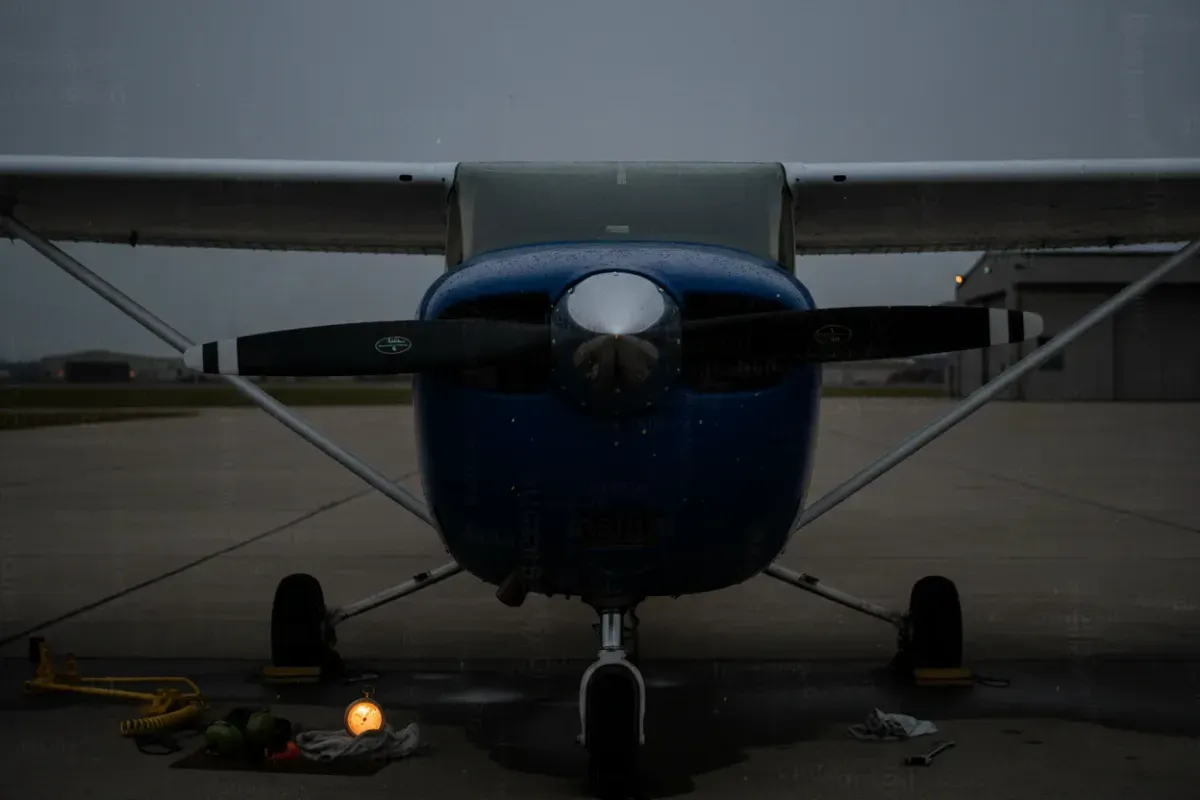
On any given training flight, a student pilot's eyes will drift toward the instrument panel dozens of times. The altimeter, the airspeed indicator, the attitude indicator — each gauge promises a precise, numerical answer to the question every pilot must constantly resolve: what is this aircraft doing right now? Yet the most reliable answer has never lived behind the glass. It lives outside the windscreen. Developing a consistent, accurate sight picture — the ability to read aircraft attitude from the relationship between the cowling, the horizon, and the surrounding environment — remains the single most important skill a pilot can build. FlySafe analysis shows that proficiency in visual reference flying underpins not only basic airmanship but also the kind of situational awareness that keeps operations safe across every phase of flight.
What Sight Picture Actually Means
The Federal Aviation Administration generally uses the term "visual reference," but as AOPA notes, most flight instructors prefer "sight picture" — a term borrowed from military weapons training that has become standard in civilian aviation. At its core, sight picture describes how the pilot perceives the aircraft's attitude by looking outside. According to AOPA, it is "how far the cowling appears below the horizon in level flight, for you" and "where the horizon intersects the panel in a steep turn, for you." The emphasis on for you is deliberate. Sight picture is personal. It changes with the pilot's height, seat position, and the specific aircraft being flown.
This concept is deceptively simple. A pilot who truly understands sight picture can set an aircraft in a climb, a descent, or straight-and-level flight without glancing at a single instrument. The instruments then serve as confirmation — not as primary guidance. As the FAA's Pilot's Handbook of Aeronautical Knowledge (Chapter 8) states, the attitude indicator provides indications that are "very close approximations of the actual attitude of the aircraft." Approximations. The real attitude is visible through the windscreen, confirmed by the feel of the controls and the sound of the airframe.
Why External Visual References Outperform the Panel
A persistent misconception among early-stage students is that flight instruments provide a more "accurate" picture of what the aircraft is doing than looking outside. This is understandable — instruments offer numbers, and numbers feel objective. But several operational realities argue against instrument dependence during visual flight.
First, instruments can fail or degrade. The alternate static source, for example, introduces known errors. According to the FAA, when the alternate static source is in use, "the altimeter indicates a slightly higher altitude than actual," "the ASI indicates an airspeed greater than the actual airspeed," and "the VSI shows a momentary climb and then stabilizes if the altitude is held constant." These are small errors, but they compound. A pilot trained to fly primarily by sight picture will notice that the aircraft's nose position relative to the horizon has not changed — and will correctly disregard the momentary instrument anomaly.
Second, instruments invite fixation. The phenomenon of instrument fixation — staring at one gauge while the overall flight situation deteriorates — is well documented in training literature and has been discussed extensively in professional pilot forums such as PPRuNe. The best defense against fixation is a pilot who does not need the instruments as a primary reference in the first place.
Third, and perhaps most importantly, Pilot Institute reminds us that "flight instruments are still only as good as the pilots who use them." The instruments report data. Interpreting that data, cross-checking it, and acting on it correctly still requires a pilot who understands the aircraft's actual state — and that understanding is built on sight picture.
Building Sight Picture from the First Lesson
The process of teaching sight picture should begin before the student ever touches the controls. According to Flying Magazine, an effective technique has the CFI performing the takeoff while calling out "the airspeed, right rudder application and pitch-up angle, noting the outside references and, if an attitude indicator is installed, the position of the stylized airplane in relation to the horizon." The student's job during this demonstration is not to memorize numbers. It is to observe what the world looks like through the windscreen at each stage of the departure.
This approach — external reference first, instrument confirmation second — establishes the correct hierarchy from the very beginning. Flying Magazine further emphasizes that "developing situational awareness and a 'sight picture'" is the key to overcoming "the initial distraction of cockpit instruments." The instruments are the distraction. The view outside is the primary source of truth.
The Initial Climb Picture
One of the first sight pictures a student must learn is what the aircraft looks like in a normal climb. Paul Hibbard of American Made Aviation describes this vividly for the RV-12: "the horizon cutting through the cowl just below the gearbox hump." During the takeoff roll, the pilot holds "full aft stick until the nose wheel just comes off the runway surface," then gradually reduces back pressure until airspeed reaches 55 knots, at which point "freezing the forward movement of the stick results in the airplane flying off the ground and accelerating."
This sequence illustrates the principle at work. The pilot is not chasing an airspeed number. The pilot is setting a visual picture — a specific geometric relationship between the cowling and the horizon — and then using the airspeed indicator to confirm the picture is correct. Once the picture is learned, the pilot can replicate it reliably every time.
Straight and Level, Turns, and Maneuvers
As Flying Magazine notes, "straight and level will look different in different models of aircraft," comparing the experience to driving different cars with "different blind spots and sight picture." A pilot who transitions from a Cessna 172 to a Piper Cherokee must recalibrate. The sight picture is not memorized once and applied forever. It is rebuilt for each aircraft type.
During maneuver training, the relationship between the cowling and the horizon becomes even more critical. Flying Magazine describes how the CFI "should point out the relationship between the horizon and cowling, noting how the nose of the airplane slides over the horizon" during turns and performance maneuvers. AOPA confirms that sight picture is critical to mastering "takeoffs, turns, ground reference maneuvers, performance maneuvers, and — perhaps most important of all — landings."
Landings, in particular, are where sight picture skills are tested most severely. The flare, the round-out, the judgment of height above the runway — none of these can be performed by reference to instruments. They are entirely visual skills, built through repetition and refinement of the pilot's sight picture.
The Role of Posture and Seat Position
A frequently underestimated factor in sight picture quality is the pilot's physical setup in the cockpit. According to AOPA, "a key to a proper sight picture is posture." If the pilot's eye level changes from flight to flight — because of a different seat position, a different cushion, or simply slouching — the sight picture changes too. The cowling-to-horizon relationship that indicated level flight last Tuesday now indicates a slight climb.
This is why consistent cockpit setup matters. Before every flight, the pilot should adjust the seat (and cushions, if used) so that the eye position is repeatable. Shorter pilots in particular may need to experiment with seat height and cushion configurations to find a position that provides both adequate outside visibility and comfortable reach to the controls. Once found, that position should be replicated exactly on every subsequent flight in that aircraft type.
From Sight Picture to Situational Awareness
The value of strong sight picture skills extends well beyond basic attitude control. A pilot who is comfortable reading the outside world spends less time head-down in the cockpit. That means more time scanning for traffic, more time observing weather developments, more time monitoring the terrain and the airport environment. In short, sight picture is the gateway to situational awareness.
Paul Hibbard captures the broader principle: if a student can "recognize a sight picture in their mind's eye, set it with the flight controls and look for feedback to make a correction, then they have learned the lion's share of the skill needed to fly." This closed loop — visualize, set, confirm, correct — is the fundamental cycle of all visual flying.
Regulatory frameworks reinforce this emphasis on visual capability. As noted in a Pilots of America discussion, 14 C.F.R. § 61.89(a)(7) prohibits a student pilot from acting as pilot-in-command when the flight "cannot be made with visual reference to the surface." The regulation exists precisely because visual reference is the primary safety mechanism for VFR operations.
The Instrument Check Still Matters
None of this is to suggest that instruments are irrelevant. A thorough instrument cockpit check remains essential, particularly before IFR operations. As David Aldridge writes for Redbird Flight, pilots should "study the ammeter very closely" during the instrument cockpit check because "the slightest low-amp reading could lead to more problems along the route." If the ammeter and voltmeter are not satisfactory during the run-up, those are "two points where you have the chance to abort your flight."
The point is not that instruments should be ignored. The point is that instruments serve a confirmatory and supplementary role during visual flight. The primary reference is outside. When instrument meteorological conditions prevail, the hierarchy reverses — but even then, pilots who have a deeply ingrained sense of sight picture tend to notice instrument anomalies faster, because they have an intuitive sense of what "right" looks like.
As Aldridge notes, "flight into IMC demands nothing less, and we must never lower our guard." The discipline built through sight picture training — the habit of constant cross-referencing, the refusal to accept a single data source as truth — transfers directly into instrument flying.
Key Takeaway
Mastering cockpit sight picture is not one skill among many. It is the foundational skill upon which traffic awareness, maneuver precision, landing proficiency, and emergency response all depend. FlySafe analysis shows that pilots who invest deliberate effort into building and maintaining their visual reference skills — across different aircraft types, different lighting conditions, and different phases of flight — develop a level of airmanship that no instrument panel alone can provide.
Recommendation: Dedicate structured training time specifically to sight picture development. On the next flight, spend the first ten minutes with instruments covered or taped (under instructor supervision) and fly solely by outside reference. Note what the world looks like in a climb, in a descent, in a standard-rate turn. Calibrate. Then use the instruments to check the work. This is how the skill is built — not by reading about it, but by doing it, repeatedly, until the sight picture becomes as natural as the view through a car windshield.
Analysis based on publicly available data only.
Frequently Asked Questions
What does the view outside the cockpit tell you about whether you are climbing or descending?
The position of the aircraft's cowling relative to the horizon provides a direct indication of pitch attitude. If the cowling sits above the horizon line, the aircraft is in a climb. If it sits below, the aircraft is descending. In level flight, the cowling maintains a consistent, aircraft-specific relationship with the horizon that the pilot learns to recognize through practice.
How do you develop your sight picture as a student pilot?
The most effective method is to observe the outside visual references during each phase of flight — particularly during instructor demonstrations — before looking at the instruments. As described by flight training professionals, the CFI should call out airspeeds and control inputs while the student watches what the world looks like through the windscreen. Over time, the student learns to associate specific visual pictures with specific flight conditions.
Is there a better way for shorter pilots to adjust their seat and use cushions for proper sight picture?
AOPA identifies posture as a key factor in sight picture consistency. Shorter pilots should experiment with seat height adjustments and firm cushions to establish a repeatable eye position that provides clear forward visibility over the cowling. The critical requirement is consistency: the same eye position on every flight in the same aircraft type ensures the sight picture remains reliable.
Where should the horizon intersect the nose during a steep turn?
According to AOPA, sight picture in a steep turn is defined by "where the horizon intersects the panel" from the pilot's perspective. The exact intersection point varies by aircraft type and pilot seat position. During training, the CFI should point out this relationship explicitly, noting how the nose of the aircraft moves relative to the horizon as bank angle increases.
- Sight picture is inherently personal — it depends on the pilot's height, seat position, and specific aircraft, meaning each pilot must calibrate their own visual reference rather than copying someone else's.
- Instruments are confirmatory tools, not primary guidance — the real aircraft attitude is visible through the windscreen, with instruments serving as approximations and subject to failure or known errors like those introduced by the alternate static source.
Powered by B1KEY
Live tools behind the analysis.
The signals FlySafe writes about are also published live — continuously verified by the Sentinel pipeline.
Information is accurate as of the publication date. FlySafe uses exclusively publicly available data.