By: FlySafe Research
Finnair Reports Q1 2026 Results: Asia Route Restructuring After Russia Overfly Ban
Finnair has released its first-quarter financial results for 2026, providing the clearest picture yet of the long-term operational and financial recalibration required following the 2022 closure of Russian airspace. The report underscores a carrier in a transformed state, having fundamentally restructured its once-core Asian network around new, longer routing corridors.
The figures are stark. While the airline reported an operating profit, it emphasized that unit costs remain elevated due to continued "significant indirect routing." Flight times to key destinations like Tokyo and Seoul have increased by 30-40%, leading to higher fuel consumption, increased crew costs, and a reduction in daily aircraft utilization. This structural shift has eroded the competitive advantage of the "fastest connection between Europe and Asia" that Finnair's geographic position once provided.
The Middle Eastern Corridor: A New Highway
In response, Finnair's strategy has crystallized around the establishment of a southern corridor via the Middle East. The airline has deepened partnerships with carriers like Qatar Airways and is utilizing airways over Turkey, the Caucasus, and Central Asia to reach Asian destinations. This routing, while longer than the Siberian corridor, is now the standardized template for its Asian operations. The airline notes close coordination with Eurocontrol and the European Union Aviation Safety Agency (EASA) to ensure the efficiency and safety of these new flight paths, which see higher traffic densities and different meteorological challenges.
Fleet Optimization for a Longer Haul
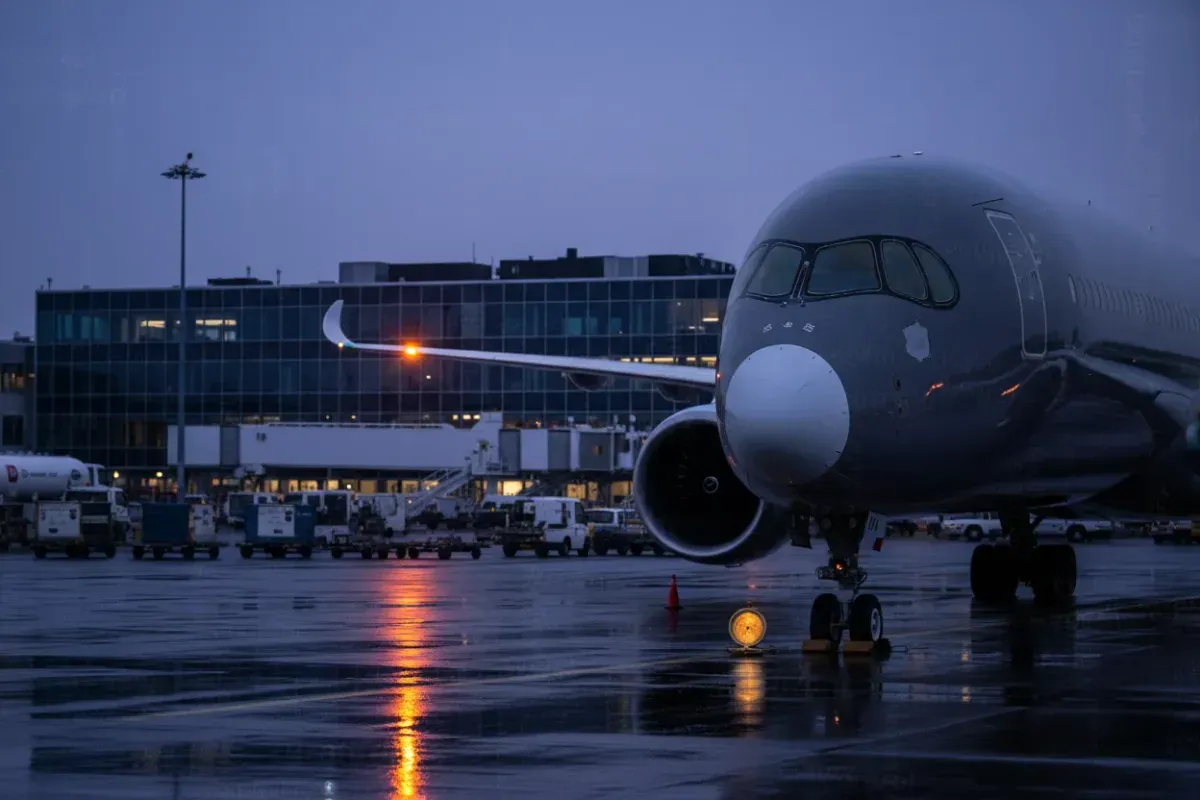
A critical component of the 2026-2027 strategy is fleet optimization. The airline is accelerating the integration of its Airbus A350-900 aircraft, lauding their fuel efficiency on extended sectors. Concurrently, Finnair is reviewing the future of its smaller Airbus A320 family aircraft used on thinner, pre-war Asian routes that are no longer economically viable. The focus is on right-sizing the fleet to match demand on its revised network, prioritizing aircraft with the range and economics to handle the extra flying hours profitably.
Safety and Risk Intelligence in Altered Airspace
The operational shift brings heightened focus on airspace risk intelligence. Finnair's flight planning now heavily incorporates data and advisories from EASA, the International Civil Aviation Organization (ICAO), and the U.S. Federal Aviation Administration (FAA) regarding the geopolitical and operational landscapes of its new corridors. The airline highlights investments in advanced navigation systems and crew training to manage increased exposure to areas with potential for heightened turbulence, volcanic ash, or complex political boundaries. As one executive noted, "Our navigational precision and situational awareness protocols have never been more critical."
Outlook and Industry Implications
Finnair's journey is a bellwether for European aviation's adaptation to a permanently altered geopolitical map. The Q1 2026 results demonstrate that the financial and operational impacts of the Russia overfly ban are not a temporary shock but a permanent new cost base. The carrier's future hinges on its ability to leverage partnerships, optimize its fleet for extreme range efficiency, and maintain razor-sharp risk assessment on every flight.
The implications extend beyond a single airline. Finnair's experience validates the strategic importance of diversified air corridor partnerships and resilient network planning. It also underscores the vital role of platforms like FlySafe.zone, which provide real-time airspace risk intelligence, enabling carriers to make informed routing decisions in an increasingly complex global environment. For Finnair, and for European aviation at large, the era of relying on geographic fortune is over; the future belongs to strategic agility and intelligent risk management.
- Закрытие российского воздушного пространства в 2022 году уничтожило ключевое конкурентное преимущество Finnair: рейсы в Токио и Сеул стали длиннее на 30–40%, что подняло затраты на топливо и экипаж и снизило суточную эффективность флота.
- В ответ Finnair стандартизировал южный коридор через Ближний Восток, Турцию и Центральную Азию, углубив партнёрство с Qatar Airways — это теперь новая операционная норма, а не временное решение.
- Авиакомпания ускоряет ввод Airbus A350-900 ради топливной экономичности на удлинённых маршрутах и пересматривает целесообразность сохранения узкофюзеляжных A320 на маршрутах, ставших нерентабельными.
Powered by B1KEY
Live tools behind the analysis.
The signals FlySafe writes about are also published live — continuously verified by the Sentinel pipeline.
Information is accurate as of the publication date. FlySafe uses exclusively publicly available data.