By: FlySafe Research
A Single Component Failure With Immediate Cockpit Consequences
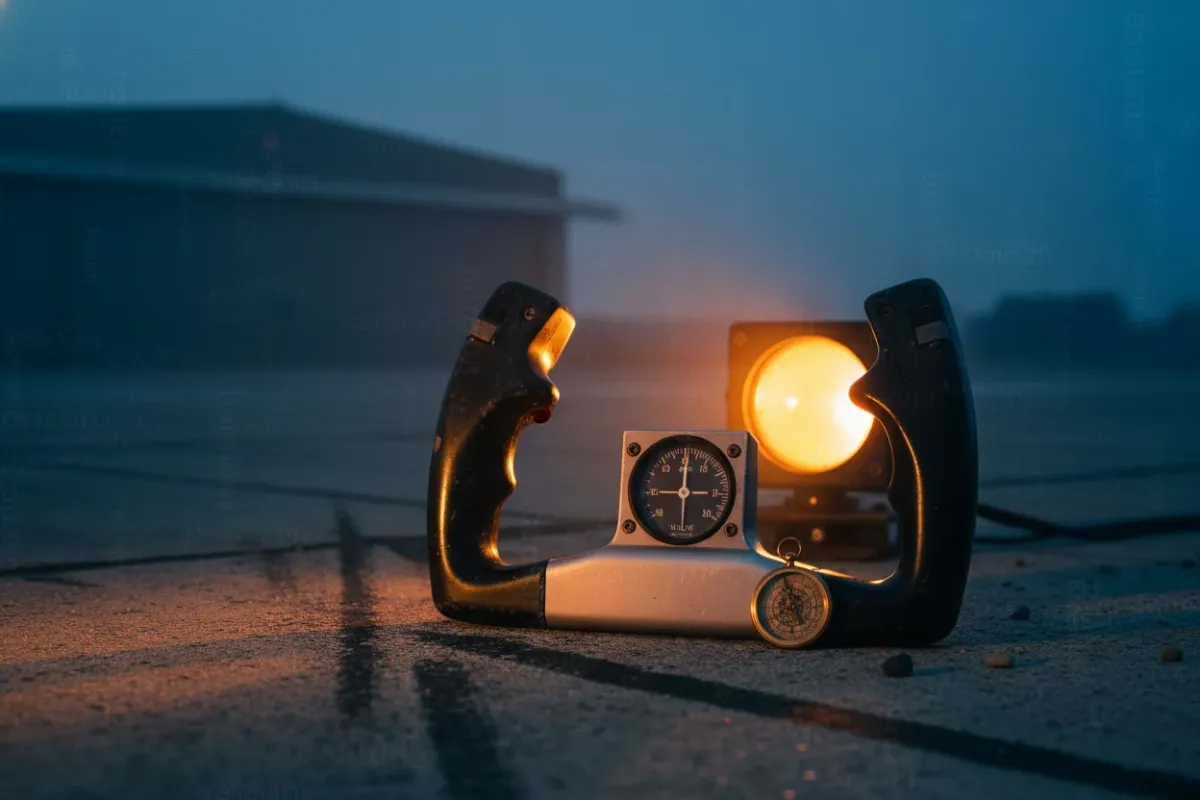
On April 8, 2026, an equipment mounting failure aboard a Boeing 737-700 demonstrated how a single mechanical component — a latch securing a heads-up display unit — can transform standard cockpit hardware into an unrestrained projectile during routine flight operations. The incident, involving Southwest Airlines Flight 568 (registration N200WN), occurred during the takeoff roll at approximately 2:20 PM PST while departing Las Vegas. The HUD unit detached from its overhead mounting and struck the captain in the head with significant force, immediately disrupting flight operations.
FlySafe analysis shows this event represents a category of risk that warrants immediate attention from operators, maintenance organizations, and certification authorities: the single-point failure of cockpit equipment mounting systems.
Understanding the Heads-Up Display Installation
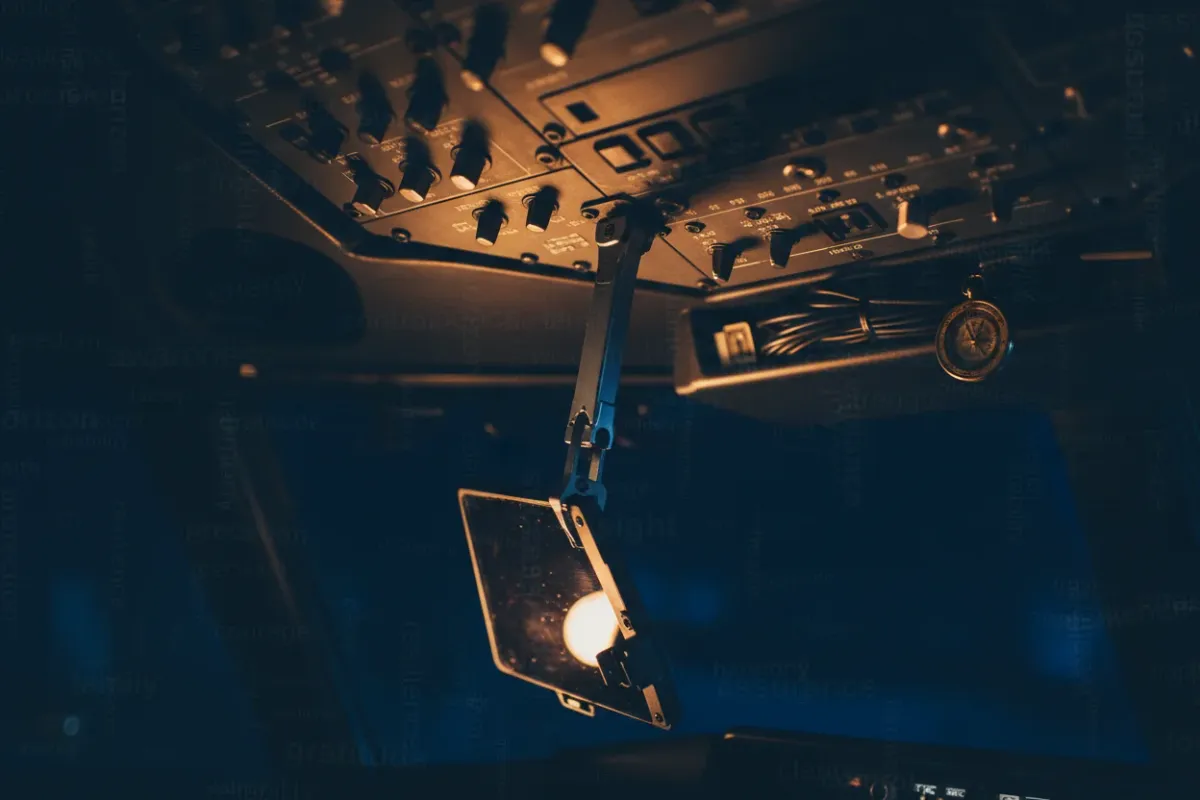
A heads-up display in commercial transport aircraft is mounted on an articulating arm attached to the overhead structure of the flight deck, positioned directly in the captain's or first officer's forward field of view. The unit comprises a combiner glass, projection optics, and associated electronics housed in a frame that typically weighs between 4 and 7 kilograms depending on the manufacturer and model generation. The mounting system must secure this mass against all anticipated flight loads, including turbulence, rejected takeoff deceleration forces, and routine vibration.
The mechanical interface between the HUD unit and its mounting arm relies on latching mechanisms that permit the display to be stowed in an upward position when not in use and deployed downward into the pilot's line of sight during operations. These latches must simultaneously allow smooth articulation for deployment and stowage while providing positive retention against displacement during all phases of flight.
In the case of N200WN, the failure of the retention latch occurred during the takeoff roll — a phase characterized by longitudinal acceleration, aerodynamic buffeting as the aircraft transitions through rotation speed, and vibration from runway surface irregularities transmitted through the landing gear and airframe structure.
Single-Point Failure: The Core Safety Concern
The most significant finding from this event is the identification of a single-point failure mode in the HUD mounting system. As reported in the initial analysis of the incident, if the mounting mechanism relies on a single latch without redundancy, failure of that one component results in complete detachment of the display unit.
This represents a fundamental design philosophy concern. In transport category aircraft certification under 14 CFR Part 25, systems whose failure could result in hazardous or catastrophic outcomes are generally required to incorporate redundancy or demonstrate an extremely low probability of failure. The question raised by this incident is whether HUD mounting hardware was adequately assessed for the consequences of detachment — specifically, pilot incapacitation during a critical phase of flight.
The force imparted by a detaching HUD is a function of the unit's mass and the acceleration environment at the moment of release. During a takeoff roll, the aircraft is accelerating forward at approximately 0.2 to 0.3 g. Combined with any vertical displacement from runway irregularities, a detached mass positioned directly above and forward of the pilot's head presents a direct impact hazard. The geometry of the installation means the HUD does not merely fall — it follows a trajectory influenced by the aircraft's acceleration, potentially increasing impact velocity relative to the pilot.
Maintenance Detection and Condition Monitoring
The challenge of detecting incipient latch failures before they reach the point of complete mechanical release is substantial. According to Veryon's analysis of aircraft system failures, Condition-Based Maintenance (CBM) strives to detect components that are in the process of failing through signs such as low-level error message patterns and conventional monitoring for adverse trends in temperatures, pressures, and vibration characteristics. However, a mechanical latch on a cockpit display unit does not typically generate electronic fault messages or telemetry data that would be captured by aircraft health monitoring systems.
The degradation mode of a mechanical latch — progressive wear of engagement surfaces, fatigue cracking of spring elements, or accumulation of contamination affecting positive engagement — occurs without generating signals detectable by the aircraft's digital systems. Detection therefore relies entirely on physical inspection during scheduled maintenance intervals. The adequacy of those inspection intervals, and the specificity of the inspection criteria for HUD mounting hardware, becomes a central question following this event.
As noted in Veryon's assessment, faults that are fixed quickly or pre-empted through early detection are not able to distract pilots in the cockpit. The corollary is equally important: faults that evade detection until catastrophic failure occurs present the maximum possible disruption to flight operations.
Certification Standards and Equipment Mounting Requirements
The certification basis for cockpit equipment installations in transport category aircraft addresses structural attachment through requirements for load-bearing capacity under specified flight and ground load conditions. Equipment must remain secured under limit loads and must not detach in a manner that could injure occupants or interfere with flight operations under ultimate loads.
However, the specific failure mode exhibited in this incident — degradation of a latching mechanism through normal operational cycling — may not be adequately captured by static load testing performed during initial certification. A latch that meets all load requirements when new may progressively lose engagement depth or spring preload through thousands of deployment and stowage cycles over the aircraft's service life.
The FAA's historical concern with cockpit design and human factors is well documented. As referenced in the Department of Transportation's April 1975 report, Recommendation number 10 stated that the FAA must undertake a major safety research program to assure that future aircraft designs make optimum use of crew capabilities, and to ensure that future systems are designed around reasonable criteria for human error. While this recommendation addressed cognitive ergonomics, the underlying principle — that cockpit design must account for foreseeable failure scenarios and their interaction with crew performance — applies directly to the physical security of equipment positioned within the pilot's immediate workspace.
Implications for Fleet Operations
The Boeing 737 family represents one of the most widely operated aircraft types globally, with thousands of units in active service across hundreds of operators. HUD installations, while not universal across the fleet, are present on a significant number of aircraft, particularly those operated by carriers that have adopted HUD-based operational credits for low-visibility approaches or enhanced flight path monitoring.
Airspace status: This incident does not directly affect airspace availability or route structure. However, the operational implications are significant for any operator whose aircraft are equipped with the affected or similar HUD mounting configurations. A pilot incapacitation event during takeoff — one of the most workload-intensive and time-critical phases of flight — could have cascading consequences for aircraft control, rejected takeoff decision-making, and departure path management.
Recommendation: Operators of Boeing 737 aircraft equipped with HUD systems should consider the following actions pending formal guidance from the manufacturer or regulatory authority:
- Review maintenance task cards for HUD mounting hardware, with particular attention to latch engagement depth, spring tension, and wear indicators
- Assess whether current inspection intervals are adequate given the cycling frequency of HUD deployment and stowage
- Evaluate whether the mounting design incorporates any secondary retention feature that would prevent complete detachment in the event of primary latch failure
- Brief flight crews on the event and establish procedures for reporting any anomalous movement, looseness, or unusual sounds from HUD mounting hardware during preflight checks or normal operations
The Broader Question of Cockpit Equipment Restraint
This incident raises a systemic question that extends beyond a single latch on a single aircraft type. Modern flight decks contain numerous items of equipment mounted in positions where detachment could result in pilot injury or interference with controls: electronic flight bags on mounting arms, tablet devices, chart holders, and various control panels. Each represents a potential unrestrained mass in the event of mounting failure.
The aviation industry has invested substantial effort in addressing the hazard of unrestrained objects in the passenger cabin — certification requirements for overhead bin latches, galley equipment retention, and cargo restraint systems reflect decades of accident investigation findings. The cockpit environment, while smaller in volume, contains equipment in closer proximity to the flight crew and in positions where even relatively small masses can cause significant injury or distraction during critical phases of flight.
Based on publicly available data, this incident should prompt a review of whether the standards applied to cockpit equipment mounting adequately address:
- Fatigue life of latching mechanisms subject to repeated cycling
- Inspection criteria that can reliably detect degradation before failure
- Redundancy requirements for equipment positioned where detachment creates a direct crew injury hazard
- Secondary retention provisions as a defense-in-depth measure
The Role of Redundancy in Equipment Mounting
The concept of redundancy in aircraft systems is well established for flight-critical functions: dual hydraulic systems, multiple electrical generators, redundant flight control computers. The principle is straightforward — no single component failure should result in loss of a critical function or create a hazardous condition.
The application of this principle to equipment mounting hardware has historically been less rigorous, particularly for items classified as non-essential for continued safe flight. A HUD, while providing significant operational benefits, is not required for aircraft control. The aircraft can be flown without it. However, this classification addresses the loss of function — not the hazard created by the physical failure mode. The distinction is crucial: the HUD is not essential for flight, but its uncontrolled detachment during flight creates a hazard independent of the display's functional role.
This represents what safety engineers term a "failure mode and effects" analysis gap. The consequences of failure were assessed in terms of loss of display function (minor) rather than physical detachment and crew impact (potentially hazardous or severe).
Condition-Based Approaches to Mechanical Wear Detection
Advancing maintenance practices toward more predictive approaches for mechanical components like latches presents technical challenges. Unlike electronic systems that can be monitored continuously through built-in test equipment, mechanical wear in latching mechanisms manifests through dimensional changes measured in fractions of a millimeter. Detection options include:
- Scheduled physical inspection with calibrated wear gauges
- Incorporation of wear indicators (visual markers that become exposed as surfaces wear)
- Replacement at fixed intervals based on conservative life estimates
- Crew reporting of any change in feel, sound, or effort during HUD operation
Each approach carries different cost, reliability, and implementation timeline characteristics. The optimal strategy likely combines several methods, with the specific approach tailored to the design details of the mounting system in question.
Key Takeaway
The detachment of a heads-up display during takeoff operations on a Boeing 737-700 demonstrates that cockpit equipment mounting hardware requires the same rigor of failure analysis, redundancy assessment, and maintenance oversight applied to other aircraft systems whose failure can create hazardous conditions. A single-point failure in a latch mechanism transformed a routine departure into a crew injury event during one of the most critical phases of flight.
FlySafe continues to monitor regulatory and manufacturer responses to this event. Operators are advised to review their HUD maintenance programs and crew awareness procedures pending formal guidance. Analysis based on publicly available data only.
Frequently Asked Questions
Why does a deployed HUD generate such dangerous force despite being a relatively small device?
A HUD unit weighing between 4 and 7 kilograms, when released from its mounting during takeoff acceleration, follows a trajectory influenced by both gravity and the aircraft's forward acceleration. The close proximity of the mounting point to the pilot's head means there is minimal distance for the pilot to perceive and react to the detachment, resulting in impact forces sufficient to cause immediate incapacitation or disorientation.
How can a mounting latch fail completely during routine takeoff operations?
Mechanical latches are subject to progressive wear through repeated cycling — each deployment and stowage event produces incremental surface wear, spring fatigue, or contamination accumulation. Over thousands of cycles across years of service, engagement depth decreases until the latch can no longer resist the dynamic loads imposed during takeoff acceleration and runway vibration.
What gaps in certification standards allowed the HUD latch mechanism to remain inadequately secured?
Certification testing typically evaluates equipment mounting under static load conditions representative of flight and ground loads. However, the fatigue life of latching mechanisms subject to repeated cycling, and the progressive degradation of engagement security over thousands of operational cycles, may not be fully captured by initial certification testing that demonstrates adequacy in the as-new condition.
Should cockpit equipment like HUDs be fitted with secondary restraint systems as a safety backup?
The principle of redundancy applied to equipment whose detachment could injure flight crew suggests that secondary retention — a lanyard, backup catch, or independent restraint that activates only upon primary latch failure — would provide a defense-in-depth measure consistent with the safety philosophy applied to other aircraft systems where single-point failures are not accepted.
Why were pilots not previously warned about the potential risk of HUD detachment during flight?
Prior to this event, HUD detachment during flight may not have been identified as a credible failure mode through the safety assessment processes applied during certification and continued airworthiness reviews. The incident demonstrates that operational experience can reveal failure modes not anticipated during design and certification, highlighting the importance of service difficulty reporting and fleet-wide trend monitoring.
- A single latch failure on the HUD mounting arm caused the display unit (4–7 kg) to strike the captain during takeoff, demonstrating that a one-component failure can immediately transform cockpit hardware into a dangerous projectile.
- The HUD mounting system has no redundancy: if the single retention latch fails, the entire unit detaches — a design that conflicts with 14 CFR Part 25 requirements for redundancy in systems whose failure can produce hazardous outcomes.
Powered by B1KEY
Live tools behind the analysis.
The signals FlySafe writes about are also published live — continuously verified by the Sentinel pipeline.
Information is accurate as of the publication date. FlySafe uses exclusively publicly available data.