By: FlySafe Research
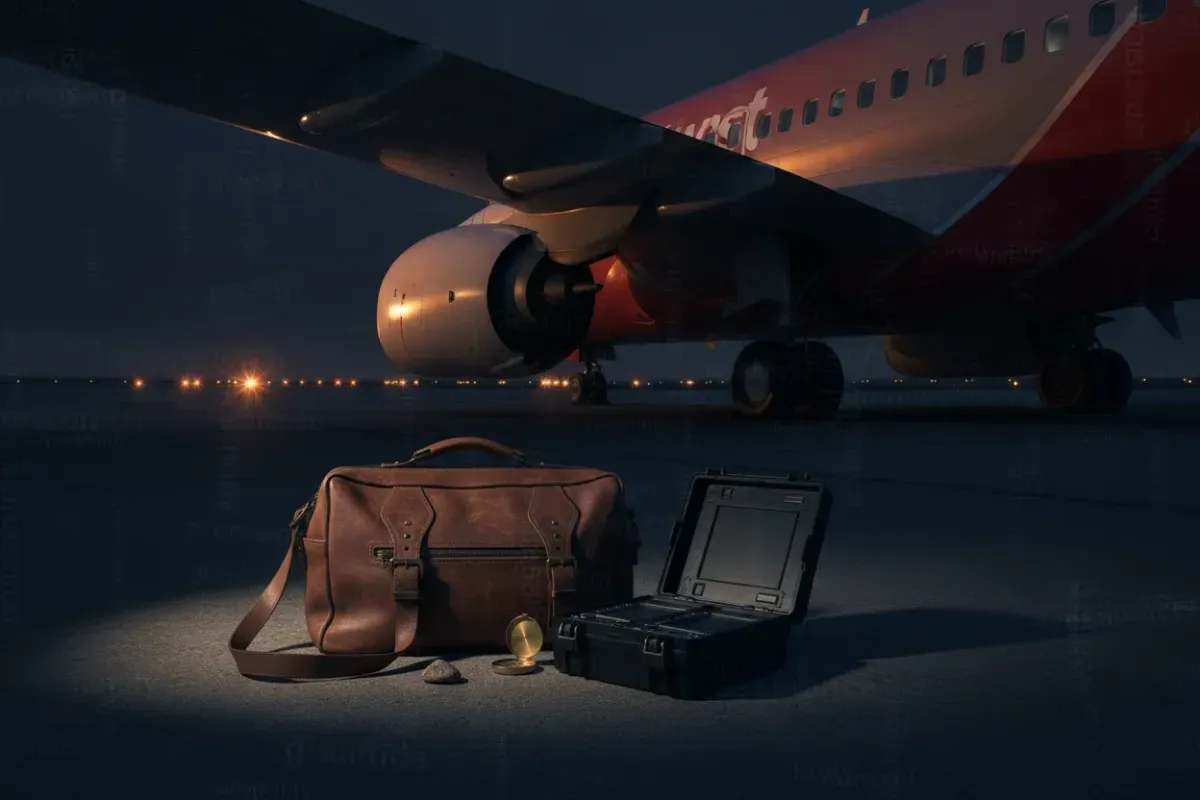
Two separate airspace incidents in a single week — one at Nashville International Airport, another in the congested terminal area around New York's JFK — have placed the Traffic Alert and Collision Avoidance System (TCAS) at the center of aviation safety discussions. In both events, TCAS Resolution Advisories (RAs) were triggered, and flight crews followed the automated guidance to restore safe separation. FlySafe analysis shows these incidents underscore the critical role TCAS continues to play as the last line of defense against midair collisions, even when procedural safeguards break down.
What Happened in Nashville
On April 18, 2026, two Southwest Airlines Boeing 737s — Flight WN-507 and Flight WN-1152 — were involved in a loss-of-separation event at Nashville International Airport. According to Flightradar24, a pair of Southwest 737s crossed paths with just 500 feet of vertical separation after one aircraft was turned into the path of the other by air traffic control.
As reported by Air Traveler Club, the controller first ordered WN-507 to climb and WN-1152 to hold at a lower altitude, then reversed the instruction — telling WN-507 to descend after WN-1152 had already passed that altitude. The result was approximately 500 feet of vertical separation, confirmed by ADS-B tracking data. This figure represents half of the FAA's minimum separation standard.
Both aircraft received TCAS Resolution Advisories. The crews complied with the automated collision avoidance commands, overriding the conflicting ATC instructions. The FAA has launched a formal investigation, with a preliminary report expected by May 15, 2026.
What Happened in New York
In the same week, a separate incident occurred in the New York terminal area. As noted by Flightradar24, a Republic Airways E175 overshot its turn to JFK's Runway 31L, flying closer to a Jazz Aviation E175 on approach to the parallel Runway 31R. TCAS Resolution Advisories were triggered on the involved aircraft, prompting crew action to increase separation.
Airspace status: The JFK terminal area is among the most congested in the United States, with closely spaced parallel approaches demanding precise adherence to assigned headings and altitudes. Any deviation — such as an overshot turn — compresses the margins that ATC and published procedures are designed to maintain.
Affected routes: Both Runway 31L and 31R approaches at JFK were involved. Parallel approach operations at major airports rely on lateral separation that can erode rapidly if an aircraft deviates from the assigned ground track.
How TCAS Functions as the Last Layer of Defense
The Traffic Alert and Collision Avoidance System was developed by the FAA to reduce the risk of midair collisions, functioning independently of the ground-based air traffic control system. According to the FAA's ACAS overview, ACAS II — which includes TCAS II and ACAS Xa — provides both Traffic Advisories (TAs) and Resolution Advisories (RAs). Resolution Advisories are recommended vertical maneuvers, or vertical maneuver restrictions, that maintain or increase vertical separation between aircraft for collision avoidance.
The system operates by interrogating the transponders of nearby aircraft at 1030 MHz and processing the replies received at 1090 MHz. As described in the FAA's TCAS II introduction, the TCAS Computer Unit performs airspace surveillance, intruder tracking, own-aircraft altitude tracking, threat detection, RA maneuver determination and selection, and generation of advisories.
A critical design feature: when both aircraft are equipped with TCAS II, the avoidance maneuvers are coordinated between the two systems. As noted by AOPA, TCAS II computers on two equipped aircraft issue deconflicting RAs, ensuring that pilots' actions minimize rather than exacerbate a collision threat. One aircraft may be commanded to climb while the other is commanded to descend — the coordination happens automatically via Mode S data link, without any input from ATC.
The Two-Tier Alert Structure
TCAS provides two levels of alert. A Traffic Advisory (TA) is issued when closure rates indicate a potential conflict, giving crews situational awareness and time to visually acquire the traffic. If the situation continues to develop, a Resolution Advisory follows with a specific vertical maneuver command.
According to data referenced on Aviation Stack Exchange, threshold times for TAs range from 20 seconds below 1,000 feet AGL to 48 seconds above FL200. For RAs, the thresholds range from 15 seconds below 2,350 feet to 35 seconds above FL200. The system activates based on closure rate — it evaluates whether the time to collision (tau) falls below these thresholds, regardless of aircraft headings or positions.
Why TCAS Overrides ATC
One of the most important operational principles of TCAS is that it takes precedence over air traffic control instructions when an RA is issued. As AeroSavvy explains, all pilots worldwide who fly TCAS-equipped aircraft are trained to follow the TCAS RA guidance and inform ATC with the standard callout: "TCAS RA." The Nashville incident is a textbook example of why this protocol exists — the controller's revised instruction conflicted with safe separation, and the automated system provided the correct escape path.
It is worth emphasizing that TCAS provides sufficient advance notice — between 15 and 35 seconds depending on altitude — that the RA maneuver does not need to be abrupt. When executed properly, passengers may not even perceive the maneuver.
Recommendation: TCAS can only command altitude changes (climb, descend, or maintain vertical speed). It does not suggest lateral turns. This vertical-only logic simplifies the coordination problem and reduces the risk of conflicting maneuvers, but it also means that lateral separation remains entirely in the domain of ATC and crew compliance with assigned headings.
Regulatory Context and System Variants
A federal mandate passed in 1987 requires all carrier aircraft to be equipped with TCAS. The FAA currently permits four variants of ACAS II in U.S. airspace: TCAS II version 6.04a Enhanced, TCAS II version 7.0, TCAS II version 7.1, and ACAS Xa. To operate within Reduced Vertical Separation Minimum (RVSM) airspace, an aircraft with ACAS II installed must be running version 7.0 or later, or ACAS Xa.
Based on publicly available NOTAMs and regulatory guidance, the system has been a cornerstone of the aviation safety net for over three decades. The MIT Lincoln Laboratory, which contributed to the system's development, described the design as having been "enthusiastically accepted by pilots and others in the aviation community" — a characterization that events like those in Nashville and New York continue to validate.
What These Incidents Reveal
The Nashville and JFK events share a common thread: TCAS activated precisely as designed when procedural separation was compromised. In Nashville, an ATC instruction error placed two aircraft in conflict. In New York, a deviation from the assigned approach path eroded lateral separation on parallel runways. In both cases, the automated system detected the converging trajectories and issued coordinated escape maneuvers that the crews followed.
These incidents do not represent system failures. They represent the safety architecture functioning as intended — a layered defense in which TCAS serves as the independent backup when the primary layer, air traffic control, is unable to maintain separation. The FAA investigation into the Nashville event will determine what procedural changes, if any, are warranted. Airlines have rerouted or adjusted procedures in the past following similar findings.
FlySafe analysis shows that these two events in a single week serve as a reminder that TCAS remains one of the most consequential safety technologies in commercial aviation. Its independent operation — requiring no ground infrastructure and no controller input — ensures that the final barrier against midair collision is always available, regardless of what happens in the ATC environment.
Analysis based on publicly available data only.
Frequently Asked Questions
Why does TCAS override air traffic control instructions?
TCAS operates independently of the ground-based ATC system by design. When a Resolution Advisory is issued, it reflects the onboard system's determination that a collision threat exists and that an immediate vertical maneuver is required. Pilots are trained globally to follow the RA and inform ATC with the callout "TCAS RA," because the system has access to real-time closure data that a controller may not be able to act on quickly enough.
What happens if one aircraft has TCAS and the other does not?
TCAS II can track and issue advisories against any aircraft equipped with a functioning transponder — including those with only Mode A/C transponders and no TCAS of their own. However, the coordinated RA feature, which ensures complementary maneuvers, only functions when both aircraft are equipped with TCAS II. Against a non-TCAS aircraft, the system will still issue an RA based on the tracked closure rate, but without inter-aircraft coordination.
How does TCAS coordinate evasive maneuvers to prevent both aircraft from taking the same action?
When both aircraft carry TCAS II, the systems communicate via Mode S data link to ensure deconflicting advisories. If one aircraft is commanded to climb, the other is commanded to descend. This coordination happens automatically between the two onboard computers, with no involvement from ATC or the flight crews in the selection process. The crews simply comply with the RA displayed in the cockpit.
What is the difference between a Traffic Advisory and a Resolution Advisory?
A Traffic Advisory (TA) is an alert that informs the crew of nearby traffic that may become a threat, allowing them to visually acquire the aircraft and increase situational awareness. A Resolution Advisory (RA) is a more urgent alert that commands a specific vertical maneuver — climb, descend, or maintain current vertical speed — to avoid a collision. TAs are issued at greater time thresholds (20–48 seconds to collision), while RAs are issued at shorter thresholds (15–35 seconds), reflecting the increased urgency.
- In both incidents, TCAS Resolution Advisories fired precisely because upstream safeguards (ATC instructions) had already failed — demonstrating that TCAS functions as a genuine last-resort layer, not a redundancy.
- In Nashville, an ATC reversal of climb/descend instructions after aircraft had already passed each other's assigned altitudes left only 500 feet of vertical separation — half the FAA minimum — showing how a single procedural error can collapse safety margins instantly.
- At JFK, an overshot turn by one aircraft compressed lateral separation on parallel approaches, illustrating how congested terminal areas leave almost no buffer when crews deviate from assigned ground tracks.
Powered by B1KEY
Live tools behind the analysis.
The signals FlySafe writes about are also published live — continuously verified by the Sentinel pipeline.
Information is accurate as of the publication date. FlySafe uses exclusively publicly available data.