By: FlySafe Research
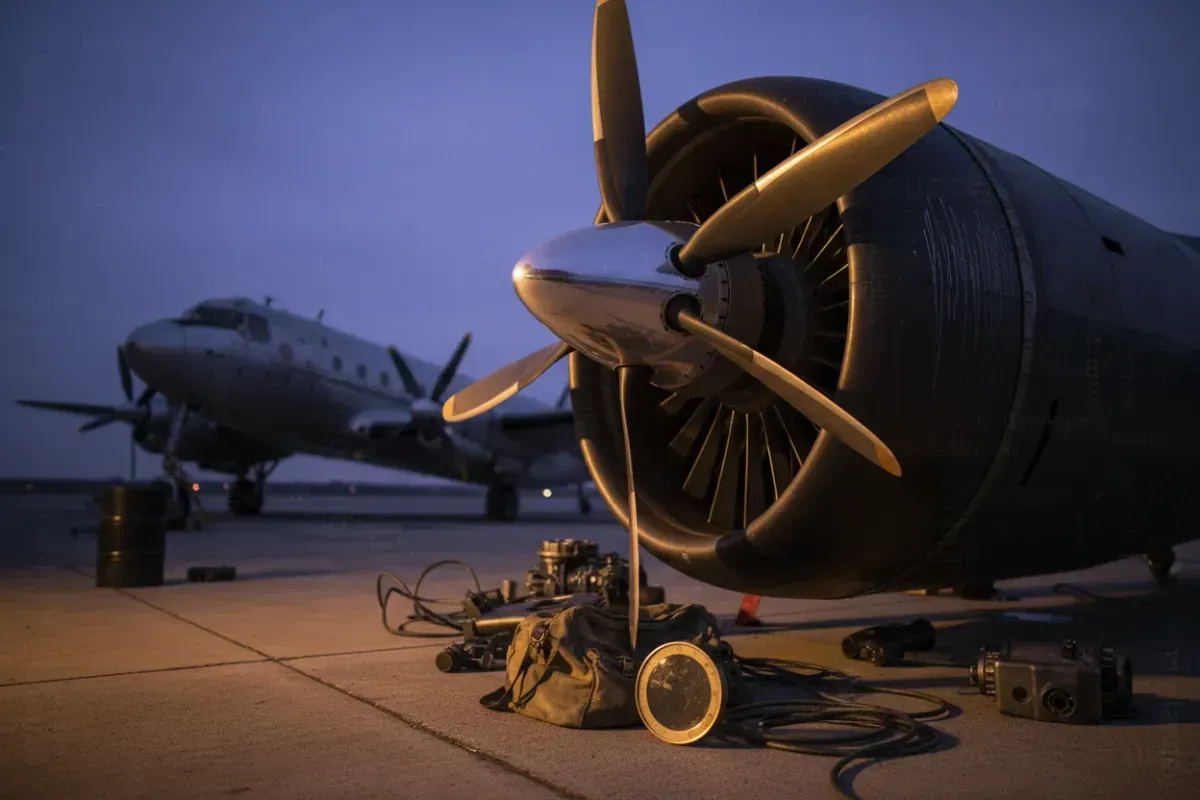
Operational and Economic Analysis of Piston-to-Turboprop Transition
The decision to transition from a piston-engine aircraft to a turboprop represents a significant operational and financial inflection point for pilots and flight departments. This analysis, based on publicly available industry data and operational cost studies, examines the concrete factors that define the logical crossover from piston to turboprop operations. FlySafe Research synthesizes data from industry publications to outline the key thresholds for mission capability, annual utilization, and cost structures that dictate when such an upgrade is economically and operationally justified.
The core finding from aggregated industry analysis indicates the economic crossover is typically reached for operators flying 200 or more hours per year on missions regularly exceeding 300 nautical miles with a validated business use case. For operations below this utilization threshold, piston aircraft generally retain a significant direct operating cost advantage. The upgrade is driven not by aspiration but by a quantifiable change in mission requirements that a piston airframe can no longer meet efficiently or reliably.
Quantifying the Mission Profile Shift
The primary driver for aircraft re-equipment is a fundamental change in operational need. The capabilities of turboprop aircraft address specific limitations inherent to piston platforms, creating a clear division in suitable mission profiles.
Extended Range and Altitude Capability: Turboprop aircraft provide mission capabilities a piston cannot match, including pressurized flight in the teens and twenties (flight levels) to fly above most weather, more range, and greater payload. This makes the turboprop fundamentally more reliable for 400-plus-nautical-mile legs or operations in challenging meteorological conditions. The ability to cruise efficiently at higher altitudes allows for smoother air, more favorable winds, and the ability to overfly significant weather systems, enhancing schedule reliability.
Mission Suitability Matrix: According to operational recommendations synthesized from industry sources, turboprop aircraft are better suited for commercial operations in the private sector and long cross-country flights. Conversely, piston engines remain ideal for short trips, flight training, and local aviation operations due to their cost-effectiveness and the simplicity of their maintenance. For a local aviation business focused on air tours or flight training, piston aircraft would typically present the most efficient option. The shift to turboprop is indicated when the mission consistently evolves beyond these local or training-centric profiles.
The Pilot Experience and Safety Considerations
The transition to turbine aircraft involves more than an economic calculation; it represents an evolution in pilot proficiency and operational safety philosophy. Industry consensus suggests pilots typically consider a turbine upgrade after accumulating significant piston experience, with most having well over a thousand hours total time. Few pilots consider the transition with less than 500 hours of experience.
A documented motivation for upgrading is a shift in pilot mindset regarding system safety and redundancy. As noted in industry commentary, the turbine engine relaxes the pilot's mind from troubles related to single-engine power loss in challenging environments such as over mountains, large bodies of water, or during night operations. Turbine engines, particularly in multi-engine configurations, offer a different risk profile regarding powerplant reliability. It is critical to understand that turbine engines in owner-flown aircraft are often "derated," meaning their power is intentionally limited for the airframe to enhance durability and longevity. For example, the PT6-42A engine in a single-engine turboprop is derated to 500 horsepower, while the same basic engine core in a larger twin-turboprop is derated to 750 horsepower, despite being capable of developing more than 1,000 horsepower. This engineering practice contributes to the renowned durability of turbine engines but is a key technical distinction from normally-aspirated or turbocharged piston engines.
Comprehensive Cost Structure Analysis
The financial implications of a turboprop upgrade are substantial and multi-faceted, extending far beyond the acquisition price. A thorough analysis of total cost of ownership is imperative.
Acquisition and Financing: Turboprop operation entails substantially higher acquisition, operating, and fixed costs compared to piston aircraft. Financing a turboprop involves greater lender scrutiny, requires higher down payments, and mandates formal initial and recurrent training for pilots. However, for qualified business operations, the upgrade can offer tangible tax advantages through accelerated depreciation schedules and typically demonstrates better long-term value retention compared to piston airframes.
Direct Operating Costs (DOCs): The variable cost per flight hour increases significantly. This includes higher fuel consumption (though often using cheaper Jet-A fuel), more expensive routine maintenance, and costlier engine overhaul reserves. Turboprop engines have different maintenance intervals and requirements, often based on cycles and hot-section inspections, which must be factored into operational budgeting.
Fixed Costs: Fixed costs escalate markedly. Hangarage for larger aircraft, higher insurance premiums due to increased hull value and different risk categories, and annual inspections of greater complexity all contribute to a higher baseline cost regardless of flight hours. Insurance rates are significantly higher, reflecting the increased asset value and different operational risk assessment by underwriters.
The 200-Hour Economic Crossover: The economic analysis becomes clear when fixed costs are amortized over annual utilization. For operators flying under 200 hours annually, the high fixed costs of a turboprop dominate, making the cost per hour prohibitive compared to a piston equivalent. As annual flight hours exceed 200, the superior speed, payload, and efficiency of the turboprop begin to offset its higher fixed costs, reducing the incremental cost per mile traveled and improving crew productivity. The total cost of a mission, including crew time and overnight expenses, must be evaluated, not just the cost per engine hour.
Recommendations for Operational Transition
For flight departments or owner-operators conducting a feasibility study, the recommendation is to base the decision on quantifiable data.
Step 1: Mission Audit: Document the past 12-24 months of operations, tracking each leg's distance, payload (passengers and baggage), destination airports (runway length, services), and frequency of weather or altitude-related delays. A pattern of regularly exceeding 300-nautical-mile legs, requiring pressurization for passenger comfort, or experiencing payload limitations is a strong initial indicator.
Step 2: Cost Modeling: Develop a detailed comparative cost model. For the piston aircraft, use actual historical costs for maintenance, fuel, and fixed expenses. For the prospective turboprop models, utilize industry-standard benchmark data from sources like the Aircraft Owners and Pilots Association (AOPA) or the National Business Aviation Association (NBAA) for operating costs. Model scenarios at 150, 200, 250, and 300 annual flight hours to identify the crossover point.
Step 3: Pilot Proficiency Assessment: Ensure pilot group qualifications and willingness to undertake mandatory training. Turbine transitions require formal initial training at a factory or approved training center (e.g., FlightSafety International, CAE SimuFlite) and recurrent training annually or semi-annually. This represents both a time and cost commitment.
Step 4: Logistics and Support: Investigate local maintenance support capabilities for the targeted turboprop model. Availability of authorized service centers and parts inventory can significantly impact operational availability and maintenance costs.
Airlines and professional flight departments have long used these analytical frameworks for fleet planning. The underlying principle is that capital equipment decisions must be driven by mission demand, not the reverse. The data indicates that for operators whose mission profile has organically grown to exceed the capabilities of a piston aircraft more than 60% of the time, and whose annual utilization sustainably exceeds 200 hours, the upgrade to a turboprop platform transitions from a luxury to a logical tool for mission efficiency.
FlySafe analysis shows that the decision is ultimately a function of rigorous operational data. The recommendation is to let documented mission requirements—distance, frequency, payload, and airspace utilization—drive the analysis, rather than starting with a predetermined aircraft solution. This data-driven approach aligns capital allocation with verified operational output, ensuring the asset directly enables core business or travel objectives.
Analysis based on publicly available data from industry operational and cost studies. FlySafe Research is an aviation risk intelligence service. Analysis is based exclusively on publicly available, independently verifiable data sources published by international aviation authorities, academic institutions, and open-data projects. FlySafe does not possess, access, or utilize any classified or non-public information.
- The economic crossover from piston to turboprop is typically reached at 200+ annual hours on missions regularly exceeding 300 nautical miles; below this, pistons retain a direct cost advantage.
- Turboprops become operationally justified for 400+ nautical mile legs where their pressurization and altitude capability provide reliability by flying above weather.
- Piston aircraft remain ideal for short trips, flight training, and local operations due to cost-effectiveness and simpler maintenance, defining the mission profile boundary.
Powered by B1KEY
Live tools behind the analysis.
The signals FlySafe writes about are also published live — continuously verified by the Sentinel pipeline.
Information is accurate as of the publication date. FlySafe uses exclusively publicly available data.