By: FlySafe Research
The global narrowbody fleet is experiencing its most significant supply constraint since the post-pandemic recovery began. Airbus delivered just 54 aircraft in the first two months of 2026 — 19 in January and 35 in February — a rate roughly 20% below the 65 jets shipped in the same period of 2025. FlySafe analysis shows this delivery shortfall is not a temporary disruption but rather a structural limitation driven primarily by engine supply failures that have cascading implications for airline operations, route planning, and airspace utilization worldwide.
The Scale of the Production Bottleneck
Airbus has confirmed its target of approximately 870 commercial aircraft deliveries in 2026, compared with 793 in 2025. However, with only 114 planes delivered between January and the end of March, the company would need to ship roughly 756 units across the remaining three quarters to meet this objective — a pace that would represent a dramatic acceleration from current rates.
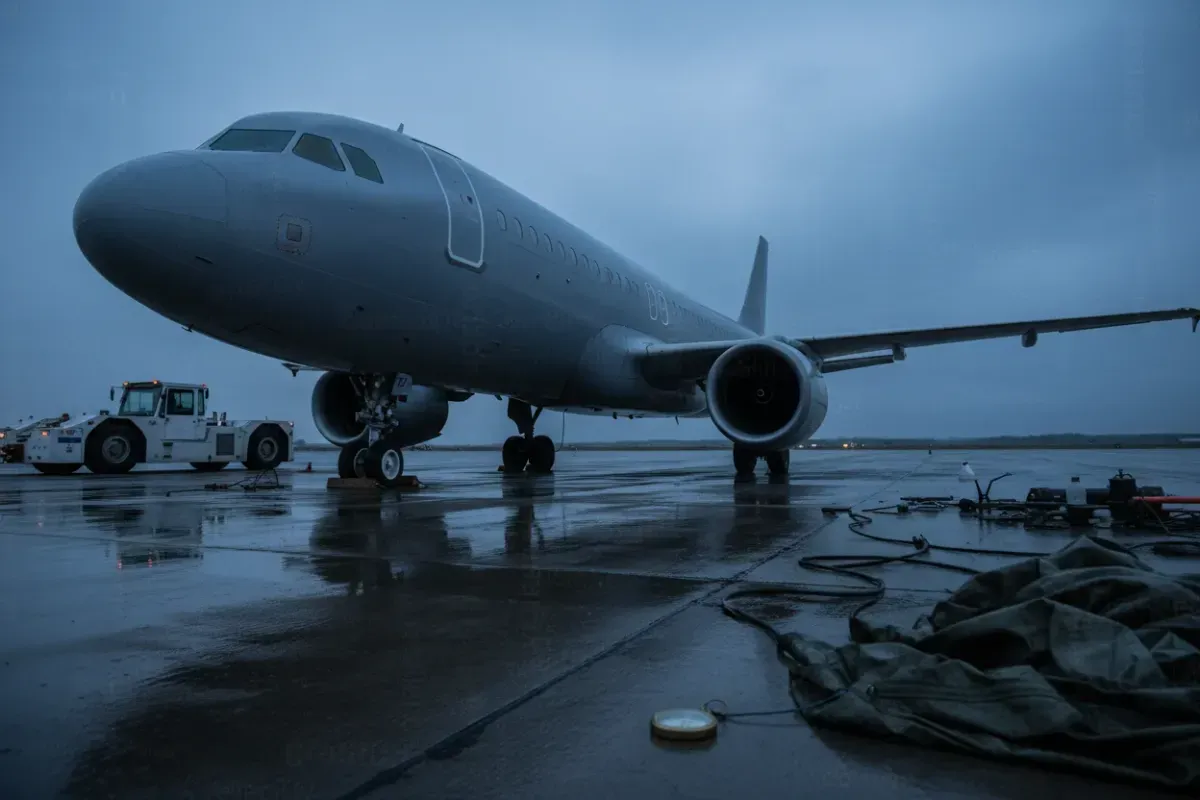
The primary constraint is the Pratt & Whitney PW1100G-JM engine from the Geared Turbofan (GTF) family, which powers a substantial portion of the A320neo fleet. According to AirMag.aero, Airbus launched a formal damages claim against Pratt & Whitney in March 2026 over GTF engine delivery failures that have created a "glider" backlog — completed airframes sitting without engines — and pushed early 2026 deliveries to the 20% deficit cited above.
This is not a new challenge. Airbus has had to trim its aircraft-delivery targets in 2022, 2024, and 2025 because of supply-chain constraints. The company has struggled to source components ranging from engines to seats to lavatories in recent years. But the engine shortage represents the most acute and financially significant bottleneck.
GTF Engine Constraints: Depth of the Problem
The Pratt & Whitney GTF recall, initiated due to contaminated powder metal concerns in engine components, has produced operational consequences far exceeding initial projections. As noted in DWU Consulting's analysis, shop visit turnaround times for affected engines have reached 300–360 days, compared to the 60 days initially projected. This sixfold increase in maintenance duration has created a compounding backlog that constrains both the active fleet and new production simultaneously.
An average of approximately 350 jets have remained grounded per year through 2026, with as many as 650 aircraft idle during the global peak in the first half of 2024. While Pratt & Whitney reported that MRO output for the PW1100G-JM increased 39% in Q4 2024 and 26% for the full year, and announced more than $100 million in additional MRO investments, structural constraints persist from repair backlogs and durability issues.
A Pratt & Whitney spokesperson stated that GTF engine deliveries in 2025 were up over 50% versus 2019 levels, and for 2026, deliveries are expected to increase by mid-to-high single digits. However, as Simple Flying reports, this growth rate remains insufficient to support Airbus's ambition of ramping A320neo production to 75 jets per month by 2027 — a target now delayed to end of 2027 at the earliest.
According to reporting by ainvest.com, Airbus CEO Guillaume Faury has publicly rebuked Pratt & Whitney, accusing the supplier of failing to meet its contractual commitments. Q1 2026 cash burn reached €2.5 billion as deliveries stalled, underscoring the financial severity of the situation.
Financial Dimensions and Compensation
The financial consequences are distributed unevenly across the value chain. RTX Corporation, Pratt & Whitney's parent company, paid $1 billion in GTF compensation during 2025. Its 2026 free cash flow guidance of $8.25–$8.75 billion assumes no further disruption — an assumption that appears increasingly optimistic given the Airbus damages claim filed in March 2026.
Airbus's stock has declined approximately 20% year-to-date as of early April 2026. The broader cost to the airline industry is substantial: according to an IATA analysis, supply chain challenges could cost airlines more than $11 billion in 2025 alone. The largest cost component is delayed fuel efficiency, estimated at approximately $4.2 billion, as airlines operate older, less fuel-efficient aircraft while waiting for new deliveries.
The worldwide commercial aircraft backlog reached a historic high of more than 17,000 aircraft in 2024. Total deliveries that year were 1,226 aircraft — a 10% decrease from 1,374 in 2019. Aircraft lease rates have increased by 20–30% from previous levels as demand for available capacity intensifies.
Operational Implications for Airlines and Airspace
The delivery shortfall has direct consequences for airline network planning, route capacity, and airspace utilization patterns observable through publicly available data.
Airspace status: Airlines that planned fleet growth around A320neo deliveries are operating with fewer aircraft than projected. This creates several observable effects:
- Frequency reductions on secondary routes as airlines concentrate available aircraft on high-yield sectors
- Extended operation of older narrowbody types (A320ceo, 737NG) beyond planned retirement dates
- Increased average fleet age — rising from 9.5 years for single-aisle passenger aircraft in 2019 to 11.2 years in 2024, according to AllianceBernstein's aviation leasing analysis
- Higher lease extension rates as airlines retain aircraft beyond original lease terms
As noted by Firoz Tarapore, CEO of DAE Capital, in the KPMG Aviation Leaders Report 2025: "Four years on from the pandemic, we would have thought the supply chain issues would have been resolved by now." He further stated that "it's hard to see the blockages that have created this situation will change in the near term."
Peter Barrett, chief executive of SMBC Aviation Capital, confirmed that "demand remains resilient and robust," with lease rates continuing to rise for all types of assets and "very high extension rates and some airlines looking to engage more than two years out from the end of the lease."
Affected routes: The capacity constraint is not concentrated in any single region but is global in scope, affecting operators of the A320neo family across all major markets. Airlines that selected the PW1100G engine option face disproportionate impact compared to those operating the alternative CFM LEAP-1A powerplant.
Structural Market Shift: The New Normal
The supply chain constraint facing the A320neo programme is not an isolated event but part of a structural shift in commercial aviation. As stated in the AllianceBernstein analysis, "Original Equipment Manufacturers (OEMs) are struggling to replace capacity cuts undertaken in 2019, supply chains and maintenance capacity remain challenged, and latest-generation technology continues to underperform expectations with no firm resolution timelines."
The aircraft retirement rate from 2020–2023 dropped to half of the normal rate, meaning older aircraft are remaining in service far longer than historical patterns would predict. According to Acumen Aviation, older depreciation curves are less reliable because "current aircraft markets are being influenced by engine shortages, supply chain constraints, parts demand, and uneven trading depth."
For lessors and operators, more aircraft value now sits in recoverable engines, modules, and teardown economics rather than continued full-aircraft operation. As Acumen further notes, airlines that want to grow "simply cannot get enough new jets," making older aircraft retention and lease extensions not a preference but a necessity.
Recommendation: Airlines, lessors, and operators should plan capacity assumptions based on continued delivery constraints through at least 2027. Route planning models that assumed fleet growth aligned with original delivery schedules require revision. The gap between ordered and delivered aircraft is likely to persist as a defining feature of narrowbody capacity through the remainder of this decade.
Implications for Airspace Planning and Safety Oversight
The extended operation of aging fleets carries implications that aviation safety regulators and airspace planners should monitor:
- Higher maintenance burden on older airframes and engines may increase AOG (Aircraft on Ground) events
- Airlines operating at maximum utilization rates with constrained fleets have less schedule buffer for irregular operations
- Concentration of available capacity on primary routes may alter traffic density patterns in certain FIRs
- Increased demand for MRO services competes with the same labour pool needed to process GTF recall inspections
Based on publicly available NOTAMs and operational data, no airworthiness directives have been issued that would restrict operations of properly maintained A320neo aircraft with serviceable GTF engines. The concern is systemic — reduced fleet availability, not individual aircraft safety.
FlySafe analysis shows that the combination of delivery delays, grounded aircraft awaiting engine shop visits, and rising average fleet age creates a capacity environment fundamentally different from pre-2020 assumptions. Airlines, airports, and regulators should calibrate their planning to a reality where new aircraft supply remains constrained and older aircraft operate longer than any historical precedent.
Key Takeaway
The A320neo production constraint represents a multi-year structural limitation, not a temporary disruption. With approximately 350 aircraft grounded, shop visit times exceeding 300 days, delivery rates 20% below prior year, and the 75-per-month production target pushed to late 2027, the gap between airline demand and aircraft availability will persist. The $11 billion annual cost to airlines from supply chain challenges, the 20–30% increase in lease rates, and the rising average fleet age all point to a commercial aviation market operating under sustained capacity pressure.
FlySafe continues to monitor the operational implications of these supply constraints through analysis of publicly available data, including delivery reports, fleet status tracking, and airspace utilization patterns. Operators and planners requiring detailed capacity risk assessments can access updated analysis through the FlySafe platform.
Analysis based on publicly available data only.
Frequently Asked Questions
How does the A320neo supply chain crisis affect regular airline passengers in the U.S.?
The primary passenger-facing impact is reduced seat availability on certain routes, potentially higher ticket prices due to constrained capacity, and in some cases frequency reductions on secondary city pairs. Airlines operating grounded A320neo aircraft may substitute older, less fuel-efficient equipment or cancel planned route launches.
How many A320neos are grounded in 2026?
Based on publicly available data, approximately 350 A320neo-family aircraft remain grounded on average through 2026 awaiting GTF engine shop visits. The peak reached approximately 650 idle aircraft in the first half of 2024 before Pratt & Whitney increased MRO throughput.
What is the difference between the Pratt & Whitney GTF and CFM LEAP-1A engines?
The A320neo is offered with two engine options: the Pratt & Whitney PW1100G-JM (GTF family) and the CFM International LEAP-1A. The current supply constraint and recall primarily affects the GTF variant. Airlines that selected the LEAP-1A option have not experienced the same grounding or delivery delays related to the contaminated powder metal issue.
How much does the A320neo grounding crisis cost airlines annually?
According to IATA analysis, total supply chain challenges could cost airlines more than $11 billion in 2025, with the largest component being approximately $4.2 billion in delayed fuel efficiency from operating older aircraft. Individual airline costs vary based on fleet composition and engine selection.
- Airbus delivered only 114 aircraft in Q1 2026 — roughly 20% below the prior year pace — because completed airframes are sitting engineless ('gliders'), and Airbus has formally sued Pratt & Whitney for damages over the shortfall.
- GTF engine shop visit turnaround times ballooned from an initially projected 60 days to 300–360 days — a sixfold overrun — grounding an average of ~350 jets per year and simultaneously strangling both the active fleet and new deliveries.
Powered by B1KEY
Live tools behind the analysis.
The signals FlySafe writes about are also published live — continuously verified by the Sentinel pipeline.
Information is accurate as of the publication date. FlySafe uses exclusively publicly available data.