By: FlySafe Research
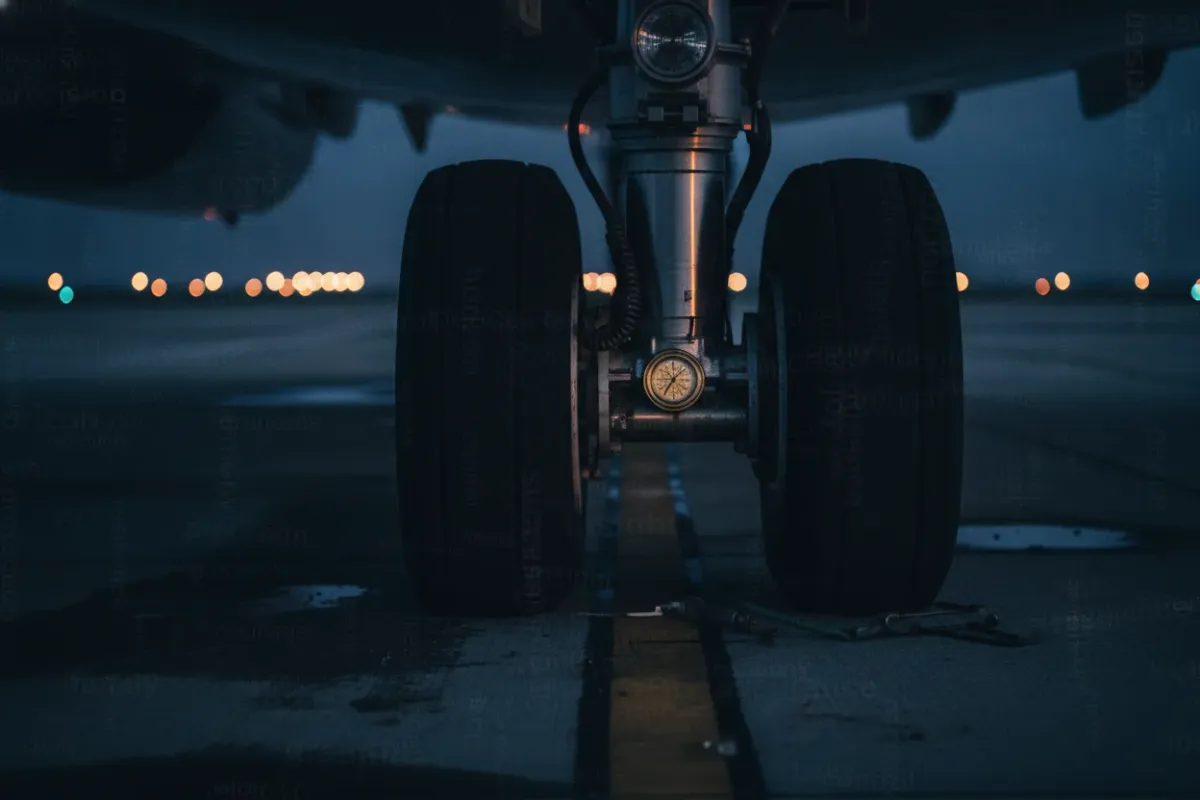
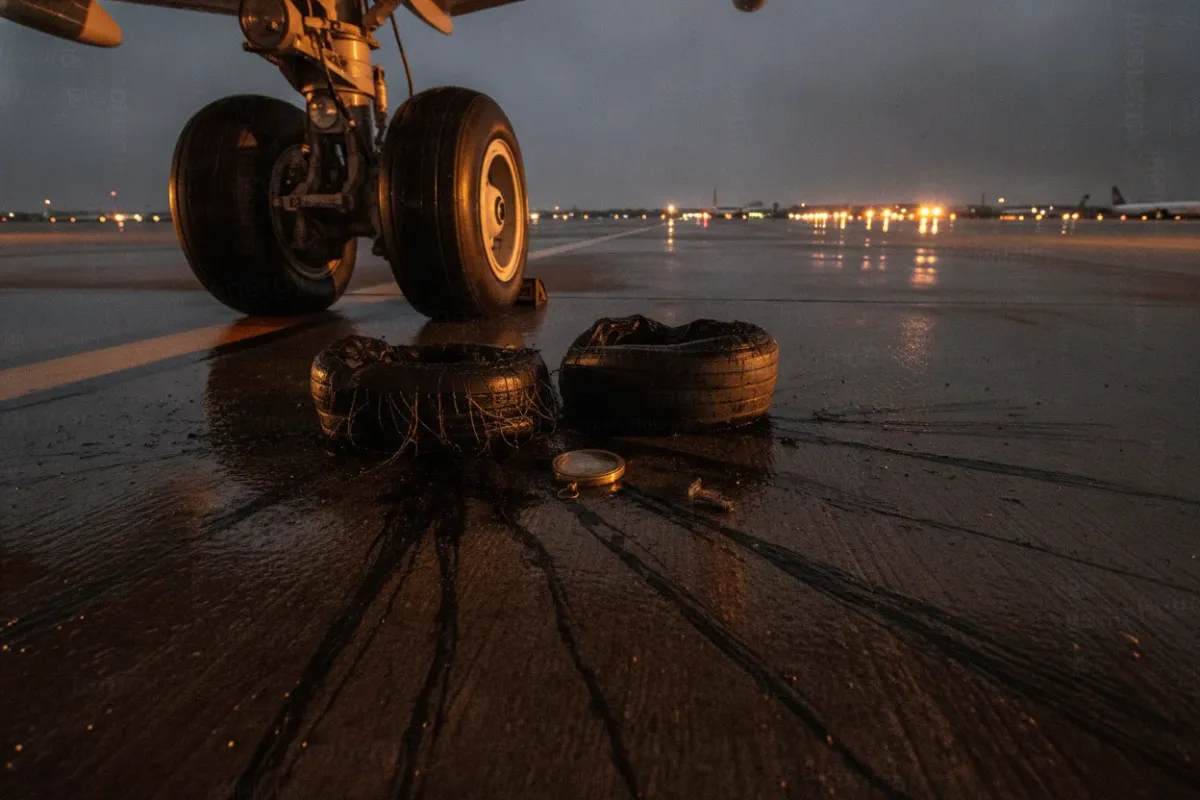
A reported decision by a Russian carrier to bar most first officers from performing landings, following a series of hard landing events, has drawn attention across the operational safety community. The measure is unusual because the landing is the phase most dependent on hands-on currency, and restricting it concentrates that workload on captains. FlySafe Research has reviewed the operational dimensions of this development using publicly available data and standard industry references, with a focus on what the change signals about crew workload, training pipelines, and touchdown safety margins rather than on any single operator.
According to publicly reported information, S7 Airlines limited landing duties for the majority of its first officers after multiple hard landing occurrences. The carrier's internal reasoning has not been published in verifiable detail, and this bulletin therefore treats the case as an illustration of a broader operational question: how operators respond when touchdown data trends move outside expected tolerances.
What Qualifies As A Hard Landing
A hard landing is not defined by passenger perception. It is defined by recorded flight data — primarily the vertical speed at touchdown and the resulting normal load factor (g). Industry references such as SKYbrary's hard landing article describe hard landings as touchdowns that exceed the structural or operational limits set by the aircraft manufacturer, after which a maintenance inspection is required before the aircraft returns to service.
Typical reference points used across the industry include touchdown vertical speeds in the order of 600 feet per minute for a firm-but-acceptable landing, with manufacturer hard-landing inspection thresholds defined in each type's maintenance manual. Normal load factors above roughly 1.8 to 2.1 g at touchdown commonly trigger a recorded event, depending on aircraft type and configuration. These figures are general industry benchmarks, not values specific to any one carrier.
The operational significance is twofold. First, a hard landing can induce structural stress requiring inspection of the landing gear, wing attach points, and fuselage, removing the aircraft from the schedule. Second, a cluster of such events over a short period is read by safety departments as a systemic signal — a possible drift in approach stabilization, flare technique, fatigue exposure, or training standardization — rather than a set of isolated pilot errors.
How Operators Detect Touchdown Trends
Modern carriers monitor landing quality continuously through Flight Data Monitoring, also known as Flight Operational Quality Assurance (FOQA). Every flight's recorded parameters are downloaded and screened against defined exceedance limits. Touchdown rate, approach stability at defined gates, threshold speed, flare height, and float distance are all measured automatically.
The Flight Safety Foundation's work on data-driven safety and ICAO guidance on Safety Management Systems both frame this as the standard mechanism by which a rise in hard landings is identified before it becomes an accident precursor. When the data shows an upward trend, a Safety Management System is expected to generate a corrective action — additional training, procedural reinforcement, simulator detail, or, in more conservative responses, a temporary restriction on who performs the landing.
FlySafe analysis shows that restricting a cohort of pilots from landing duty sits at the more conservative end of that spectrum. It is a fast-acting administrative control that reduces immediate exposure, but it does not by itself address an underlying cause such as approach destabilization or fatigue.
The Currency Problem A Landing Restriction Creates
Landing is a perishable skill. Regulatory frameworks worldwide require pilots to maintain recency — commonly three takeoffs and three landings within a defined recent period — to remain current to operate with passengers. Manual landing practice cannot be fully substituted by automation, because most commercial landings are flown by hand from the point of disconnecting the autopilot.
When first officers are removed from landing duty for an extended period, several second-order operational factors arise:
Skill degradation across the cohort
A first officer who does not land for weeks or months loses fine-motor currency in the flare and de-crab. Reintroduction then requires structured simulator and line training to rebuild proficiency, which lengthens, rather than shortens, the path back to a stable touchdown standard.
Increased captain workload
If only captains land, the captain becomes Pilot Flying for every approach in marginal conditions, while the first officer is confined to the monitoring role. This concentrates fatigue and decision load on one crew member during the highest-workload phase of flight, which can itself erode safety margins.
Training-pipeline strain
Command upgrade depends on demonstrated landing competence. A prolonged restriction slows the progression of first officers toward captaincy, with downstream effects on crew availability across the network.
These factors are well established in crew-resource-management literature and are the reason landing restrictions are typically framed as temporary, paired with a defined remediation and return-to-line plan.
What The Pattern Signals For The Wider Industry
A cluster of hard landings rarely traces to a single skill gap. Recognized contributing factors documented in safety literature include unstable approaches continued below the stabilization gate instead of a go-around, gusty or tailwind conditions at the threshold, visual illusions on approach to certain runways, fatigue from dense rostering, and inconsistent flare technique across a fleet of varying types.
The most durable mitigation identified across the industry is not a restriction on who lands, but a reinforced go-around policy. Data repeatedly shows that the majority of hard landings follow approaches that were unstable at low altitude and should have been discontinued. Strengthening the no-fault go-around culture addresses the root condition that produces hard touchdowns in the first place.
Affected operations: flight crew landing assignments and recency currency, not airspace or routing. There is no associated airspace restriction, NOTAM, or route closure connected to this operational measure, and scheduled services are not reported to be affected at the network level.
Key Takeaway
A surge in hard landing events is an operational signal, not a verdict on individual crews. Removing a cohort of first officers from landing duty reduces near-term exposure but introduces currency, workload, and training-pipeline costs that must be actively managed. The more sustainable response, supported by flight-data evidence, is reinforcement of approach stabilization criteria and an unambiguous go-around policy, supported by FOQA trend monitoring and targeted simulator training.
Recommendation: Operators observing a rise in touchdown exceedances should treat it as a systemic indicator, validate it against FOQA data, examine approach stabilization and fatigue exposure as primary factors, and pair any temporary landing restriction with a defined remediation and return-to-line program so that crew currency is rebuilt rather than allowed to decay.
FlySafe Research will continue to monitor publicly reported operational measures of this kind and assess their implications for crew currency and touchdown safety margins. For ongoing aviation risk intelligence drawn exclusively from open, independently verifiable sources, follow FlySafe's bulletins.
Analysis based on publicly available data only. This bulletin does not assert internal findings of any operator and draws on standard industry references for definitions and benchmarks.
- Hard landings are defined by objective flight data — vertical speed and g-load at touchdown — not by how the landing felt to passengers; a cluster of such events is read as a systemic signal (training drift, fatigue, stabilization issues), not a collection of individual pilot mistakes.
- FOQA/FDM systems automatically screen every flight against defined exceedance limits, turning landing quality into a continuous trend rather than an anecdotal report — meaning carriers see patterns long before they accumulate into incidents.
- Restricting first officers from performing landings creates a self-defeating loop: the landing is precisely the phase most dependent on hands-on currency, so removing FOs from it degrades the proficiency the restriction was meant to protect against.
Powered by B1KEY
Live tools behind the analysis.
The signals FlySafe writes about are also published live — continuously verified by the Sentinel pipeline.
Information is accurate as of the publication date. FlySafe uses exclusively publicly available data.