By: FlySafe Research
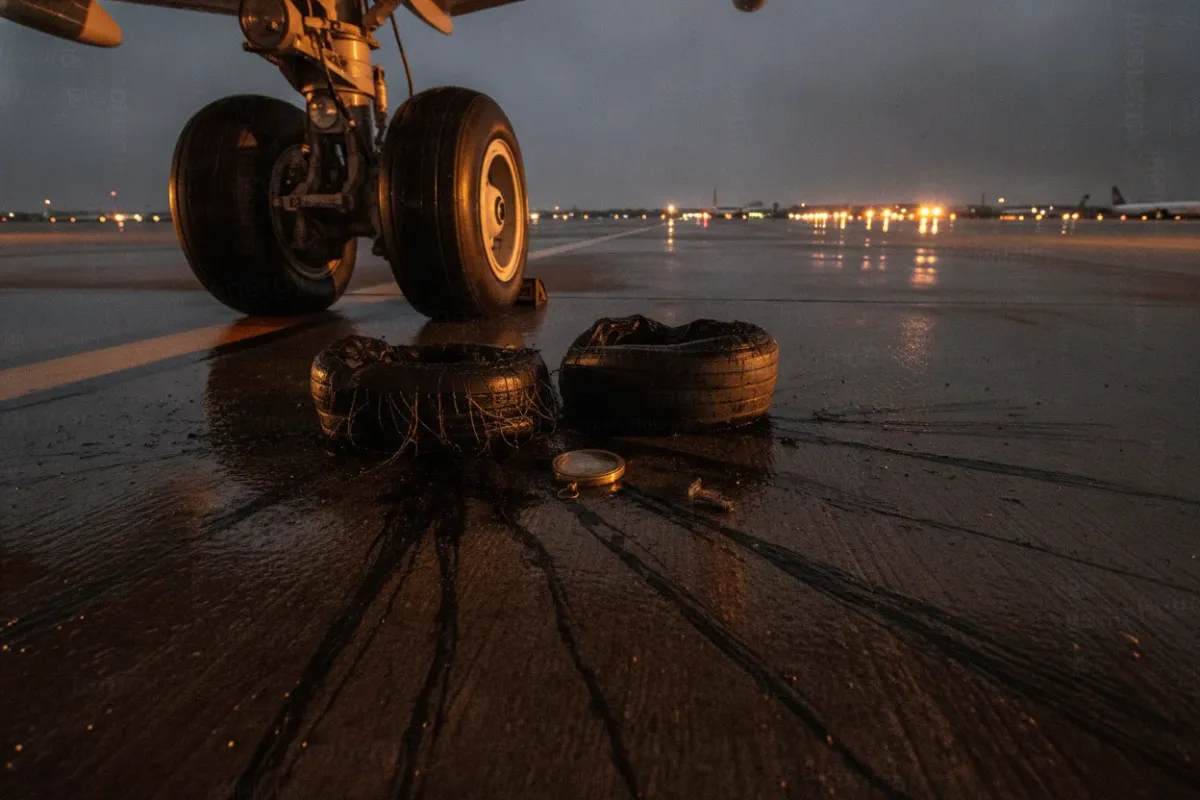
A single double-tire failure on a commercial jet is an uncommon event. The same failure mode recurring on the same flight number, operated by the same aircraft type, within eight days, is statistically rare enough to warrant closer examination. According to publicly available reporting, a Singapore Airlines Boeing 737 MAX 8 operating flight SQ114 experienced a second double-tire blowout eight days after a near-identical occurrence on the same service. FlySafe analysis treats clustered, repeating technical events as a distinct signal category — one that merits review beyond the headline.
This bulletin summarizes what is publicly known, explains the relevant aircraft systems in neutral technical terms, and outlines the operational considerations for travelers and operators. No cause has been publicly determined for either event, and nothing here should be read as attributing one.
The Incident: A Repeat Pattern on SQ114
The reported facts are narrow and should be stated precisely. A Boeing 737 MAX 8 assigned to flight SQ114 suffered the deflation or rupture of two tires. Eight days later, the same flight number experienced a comparable double-tire event. The defining characteristic is not the severity of either occurrence in isolation — tire failures are a recognized and generally survivable category of incident — but the repetition.
In aviation safety analysis, recurrence is the variable that changes the interpretation. An isolated tire failure is typically classified as a discrete event, frequently linked to runway-surface conditions or a single damaged component. A repeat on the same route pairing shifts the analytical question from "what failed" to "what condition is being repeated." That distinction is why clustered events are tracked separately from one-off occurrences in structured safety monitoring.
Affected routes: the disruption is confined to the specific SQ114 rotation and any aircraft and crew downstream of it. There is no published indication of a wider network or fleet effect, and this bulletin does not imply one.
Understanding the 737 MAX 8 Landing Gear
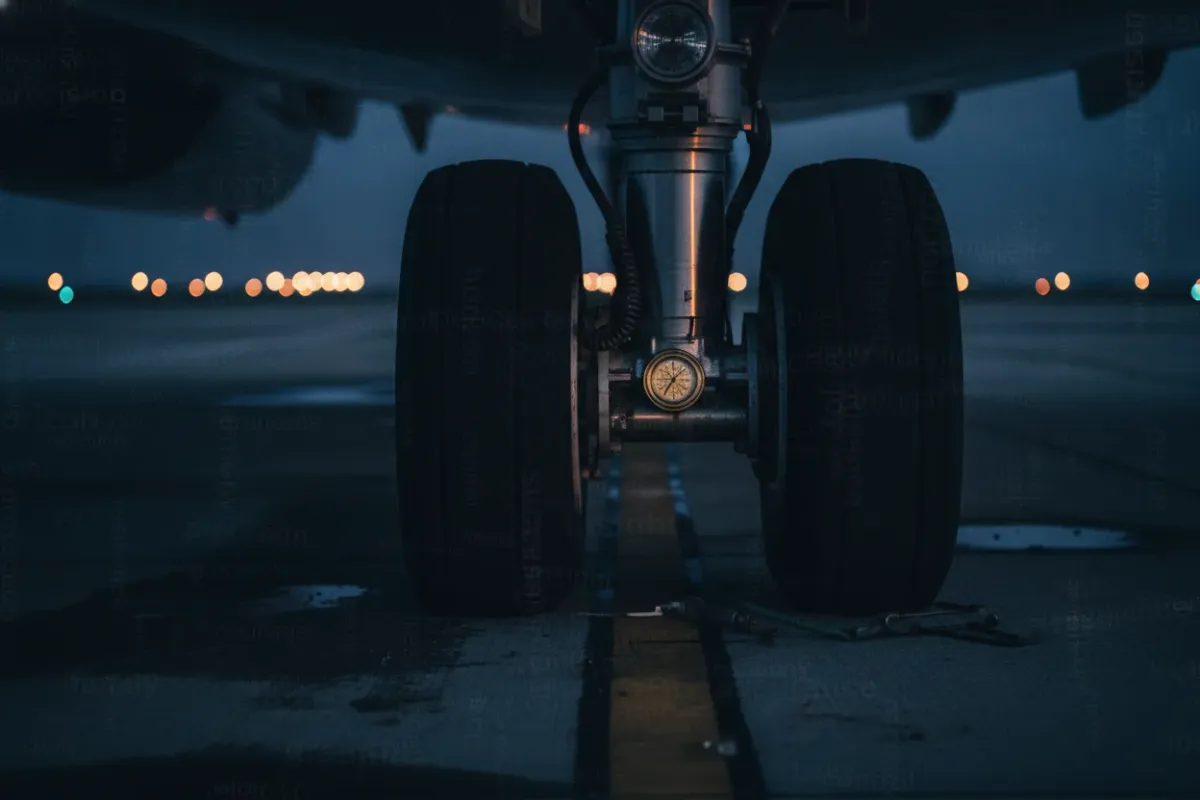
Context on the airframe helps frame the event without speculation. The Boeing 737 family, including the MAX 8, uses a conventional tricycle landing gear: a nose gear with two wheels and two main gear legs, each carrying two wheels, for six tires in total. A "double-tire" event therefore typically refers to two tires on a single main gear assembly, which share load and runway contact during takeoff roll, landing, and braking.
Aircraft tires operate under demanding conditions — high inflation pressures, heavy dynamic loads, and significant heat generated during braking. The 737 is certified to operate safely with a deflated or failed main tire; the companion tire on the same axle and the opposite main gear are designed to carry the load for a safe landing. This is one reason tire failures, while disruptive, rarely escalate into more serious outcomes when handled per standard procedure. Detailed airworthiness standards for tires and wheels are published by regulators such as the European Union Aviation Safety Agency.
What Investigators Examine After a Tire Failure
When a tire event recurs, the standard analytical approach is to separate aircraft-specific factors from environment-specific factors. The following are general categories that safety investigators routinely examine. None is being asserted as the cause of the SQ114 events.
- Foreign object debris (FOD). Runway and taxiway debris is a leading contributor to tire damage industry-wide. FOD that is tied to a particular airport, runway, or surface condition can produce repeat damage on aircraft using the same route.
- Inflation and pressure management. Under-inflation increases sidewall flex and heat, both of which accelerate failure. Pressure is checked against maintenance schedules.
- Brake and thermal loading. Heavy braking generates heat that can affect adjacent tires; thermal fuse plugs are designed to release pressure in a controlled manner under extreme heat.
- Tread and casing condition. Tire wear limits, retread integrity, and casing age are reviewed against records.
- Operational profile. Takeoff weights, runway length, and surface condition on a specific route influence stress on the gear.
The value of distinguishing these categories is practical. An aircraft-side factor would be expected to follow the airframe across different routes. An environment-side factor — a specific runway surface, for example — would be expected to recur where the route does. A repeat on the same flight number is precisely the pattern that prompts investigators to weight environment-side and route-specific factors alongside component history. The independent incident record maintained by services such as the Aviation Safety Network is one public reference point for how comparable events have been categorized historically.
Operational Impact and Affected Routes
Airspace status: unaffected. Tire events of this nature do not generate airspace restrictions or NOTAMs, and there is no published indication of any route closure, FIR-level restriction, or navigational impact associated with SQ114. The operational footprint of such an event is limited and ground-based.
The realistic consequences are schedule-related rather than safety-critical in the en-route phase. A double-tire event typically requires the affected aircraft to be withdrawn from service for inspection and wheel replacement, runway inspection for debris, and possible aircraft substitution for subsequent rotations. Passengers on the affected service may experience delay or rebooking. Airlines have rerouted or re-equipped individual rotations in comparable situations as a standard operational response, and stating that fact carries no criticism of any operator. These are routine, conservative measures taken in the interest of safety.
For the wider traveling public, the practical takeaway is proportion. Tire failures are among the more frequently reported technical occurrences in commercial aviation and are managed through established procedures. The element that distinguishes the SQ114 case is repetition, not an elevated risk to a flight already underway.
Recommendation for Travelers and Operators
Recommendation: travelers booked on the affected service should monitor official airline channels for schedule changes and follow standard rebooking guidance; no change in routine travel behavior is indicated by the public facts. For operators and route planners, the analytically sound response to a same-route recurrence is to evaluate route-specific environmental factors — including runway-surface and FOD-control conditions at the relevant airports — in parallel with the airframe's component history, rather than treating the two events as independent.
FlySafe analysis shows that recurring technical events clustered on a single route are best assessed as a pattern, with the route environment and the airframe history examined side by side. The publicly available record does not, at this stage, support any single conclusion, and none should be drawn prematurely.
Key Takeaway
Two double-tire events on SQ114 within eight days form a statistically notable cluster, but the public facts remain limited and no cause has been established. The 737 MAX 8 is designed to land safely following a tire failure, the events carry no airspace or NOTAM implications, and the principal impact is operational. The signal worth tracking is the repetition itself, which is exactly the kind of clustered pattern that structured safety monitoring is built to flag.
FlySafe continues to monitor publicly available aviation safety reporting and surfaces recurring patterns like this one for travelers, operators, and analysts who need an early, evidence-based read on operational risk.
Analysis based on publicly available data only. FlySafe does not access classified or non-public information, and this bulletin attributes no cause to the events described.
- Повторение одного и того же отказа на одном и том же рейсе в течение 8 дней меняет аналитический вопрос: не «что сломалось», а «какое условие воспроизводится» — именно поэтому кластерные события выделяются в отдельную категорию сигналов.
- На 737 MAX 8 двойной отказ шин обычно означает два колеса одной стойки основного шасси; самолёт сертифицирован продолжать полёт с вышедшей из строя шиной, поэтому такие события редко перерастают в серьёзные последствия.
Powered by B1KEY
Live tools behind the analysis.
The signals FlySafe writes about are also published live — continuously verified by the Sentinel pipeline.
Information is accurate as of the publication date. FlySafe uses exclusively publicly available data.