By: FlySafe Research
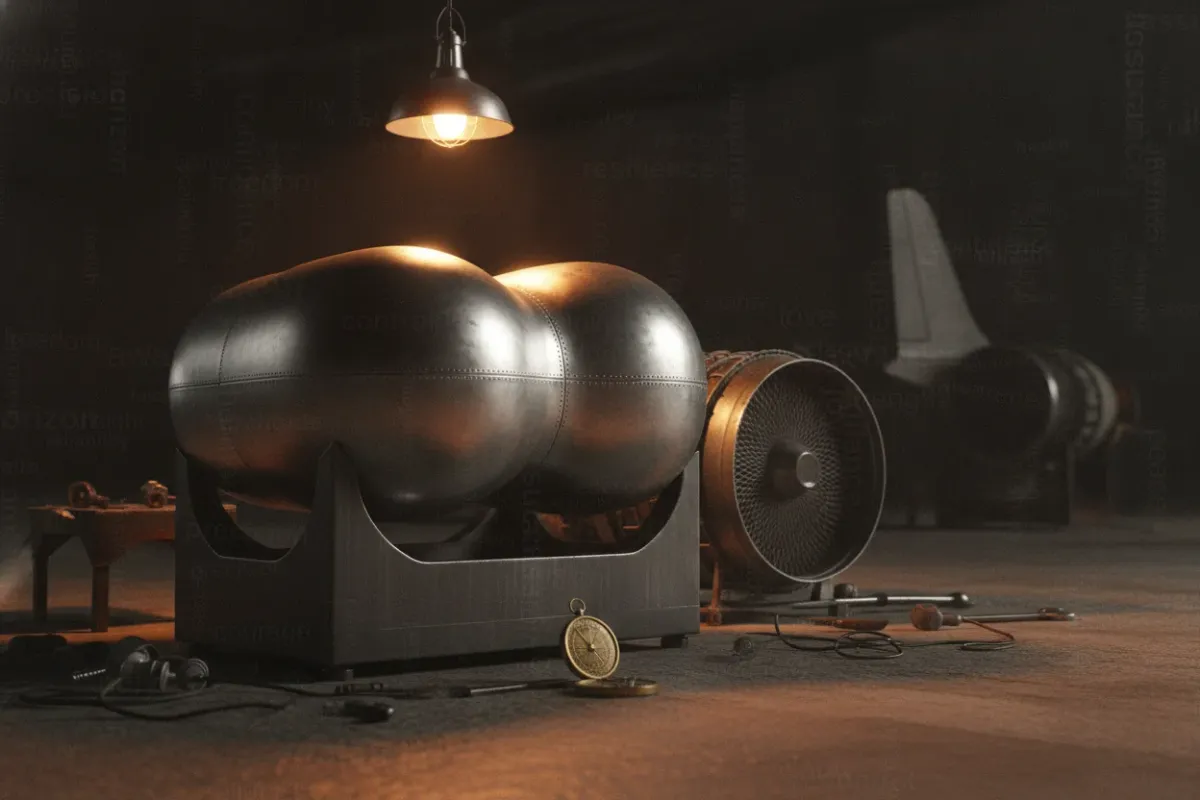
A concept airliner that abandons the conventional tube-and-wing silhouette in favor of a wide, twin-lobed fuselage has advanced into NASA's research study phase. The design, commonly referred to as the "double bubble," integrates conventional turbofan engines, electrically driven tail fans, and a fuselage shaped to generate lift. FlySafe analysis reviews the publicly documented features of the concept and outlines what a configuration of this type could mean for future flight operations, route planning, and airworthiness assessment.
This bulletin draws exclusively on publicly available technical material and authority publications. No operational restrictions or NOTAM actions are associated with a research-stage concept; the discussion below is forward-looking and addresses design characteristics rather than any active airspace status.
What the "Double Bubble" Configuration Is
The double bubble name describes the cross-section of the aircraft. Instead of a single cylindrical tube, the fuselage is formed from two partial cylinders joined side by side, producing a wider, flatter body. This shape allows the fuselage itself to contribute aerodynamic lift, a property described as a "lifting fuselage." In a conventional airliner, nearly all lift is generated by the wings, and the fuselage is largely an aerodynamic penalty that must be carried. A lifting body redistributes that workload.
The concept combines three propulsion and aerodynamic elements:
- Turbofan engines for primary thrust, consistent with current commercial practice.
- Electric tail fans, positioned at the rear of the aircraft, intended to draw in and re-energize the slower-moving boundary-layer air that flows along the fuselage surface.
- A lifting fuselage, which reduces the lift demand placed on the wings and can allow a smaller, lighter wing structure.
The rear-mounted fan arrangement reflects an aerodynamic principle known as boundary-layer ingestion. By ingesting the retarded airflow that clings to the fuselage and accelerating it, the propulsion system can recover energy that would otherwise be lost as drag. The electric drive for these fans is the element that classifies the design as hybrid-electric: combustion engines remain the main power source, while electrical systems handle a defined portion of the propulsive task.
Why a Configuration Like This Is Being Studied
The central engineering objective behind such concepts is reduced fuel burn per seat. A lifting fuselage that carries part of the lift load permits a smaller wing, and a smaller wing reduces structural weight and drag. Boundary-layer ingestion offers an additional efficiency gain by improving propulsive effectiveness at the tail. Taken together, these features target lower energy consumption for a given payload and range.
NASA has a long-standing role in researching airframe and propulsion concepts that sit beyond the current production fleet. Studies of this kind typically evaluate aerodynamic performance, structural feasibility, noise characteristics, and integration challenges well before any flight hardware is built. Placing a concept into a study phase indicates analytical and, in some cases, sub-scale evaluation work — not a commitment to production. Background on the agency's aeronautics research direction is published openly through NASA Aeronautics.
It is worth distinguishing the research horizon from the operational one. Concepts at this stage are measured in development decades, not seasons. The features described here represent design intent under evaluation rather than confirmed performance figures.
Operational Considerations for a Novel Airframe
Although no airspace status applies to a research concept, FlySafe analysis frames the operational questions that any unconventional airframe must eventually answer before it enters service. These considerations are routinely examined by certification authorities and are useful for understanding why radical configurations take many years to reach the flight line.
Airport and Gate Compatibility
A wider fuselage changes the aircraft's ground footprint. Gate spacing, jet-bridge geometry, taxiway clearances, and the ICAO aerodrome reference code that governs them are all defined around existing fuselage and wingspan envelopes. A flatter, wider body would need to demonstrate compatibility with the established airport categories, or drive changes to ground infrastructure planning.
Certification and Airworthiness
Hybrid-electric propulsion introduces airworthiness questions that conventional turbofan aircraft do not raise: high-voltage electrical distribution, thermal management, battery or energy-storage safety, and the failure modes of an electrically driven fan. The European Union Aviation Safety Agency has published guidance on the certification of electric and hybrid propulsion, available through the EASA publications library. Any production design would need to satisfy these frameworks, and the certification basis for a novel configuration is typically negotiated case by case.
Evacuation and Cabin Layout
A twin-lobed cabin produces a different internal cross-section from a single-aisle or conventional twin-aisle tube. Emergency evacuation standards — the requirement to clear the cabin within the regulated time using half the available exits — would have to be demonstrated for the new geometry. Cabin layout, aisle configuration, and exit placement all flow from the fuselage shape.
What This Means for Flight Operations Today
For current flight planning, the immediate operational impact is none. A study-phase concept does not affect today's routes, schedules, or airspace.
Airspace status: Not applicable. The subject is a research design, not an operational aircraft, and no NOTAM or restriction is associated with it.
Affected routes: None at this time. The relevance to network planning is long-term and contingent on a concept reaching certification and production.
Recommendation: Airlines and operators tracking fleet-renewal strategy may note hybrid-electric and lifting-fuselage research as part of the broader efficiency-technology landscape, alongside open-rotor, blended-wing-body, and advanced turbofan programs. No procurement or operational action is warranted by a research milestone.
The value of monitoring concepts at this stage lies in understanding the direction of efficiency research, not in any near-term operational change. Configurations that reduce fuel burn per seat are of structural interest to operators because energy cost is a dominant and volatile component of operating expense, and commodity market volatility correlates with operational and planning pressures across the industry.
Key Takeaway
The double bubble concept pairs a lifting fuselage with hybrid-electric, boundary-layer-ingesting tail fans to target lower fuel burn per seat. It remains a research-phase study, not a flying or certified aircraft. Its eventual relevance to operations would depend on demonstrating airport compatibility, satisfying hybrid-electric certification frameworks, and meeting cabin-safety standards — each a multi-year process. For now, the concept is a signal of where airframe and propulsion efficiency research is heading, not a change to any current operation.
FlySafe continues to monitor airframe, propulsion, and airspace developments using publicly available, independently verifiable sources, translating technical and operational signals into clear guidance for operators and travelers.
Analysis based on publicly available data only. This bulletin addresses a research-stage design concept and does not constitute operational, procurement, or airworthiness advice.
- The "double bubble" fuselage isn't just a shape quirk — by joining two partial cylinders side by side, the fuselage itself generates aerodynamic lift, unlike a conventional tube which is a pure drag penalty that the wings must overcome.
- The electric tail fans use boundary-layer ingestion: they ingest the slow, drag-laden air that clings to the fuselage and re-accelerate it, recovering energy that a conventional rear-mounted design simply wastes.
- The efficiency case stacks two independent gains — a lifting fuselage shrinks the required wing (less weight and drag), while boundary-layer ingestion improves propulsive effectiveness — making the combined fuel-burn reduction larger than either feature alone.
Powered by B1KEY
Live tools behind the analysis.
The signals FlySafe writes about are also published live — continuously verified by the Sentinel pipeline.
Information is accurate as of the publication date. FlySafe uses exclusively publicly available data.