By: FlySafe Research
Airline catering has long been a marker of brand identity, and a recent move by Swiss International Air Lines (SWISS) suggests the category is shifting. The carrier has introduced a limited-edition "Bastardo" hot dog as a premium-cabin snack — a deliberate departure from the caviar-and-canapé tradition that has defined first-class dining for decades. FlySafe analysis shows that catering decisions, while operationally minor, often signal broader changes in how carriers position the passenger experience.
What SWISS Introduced
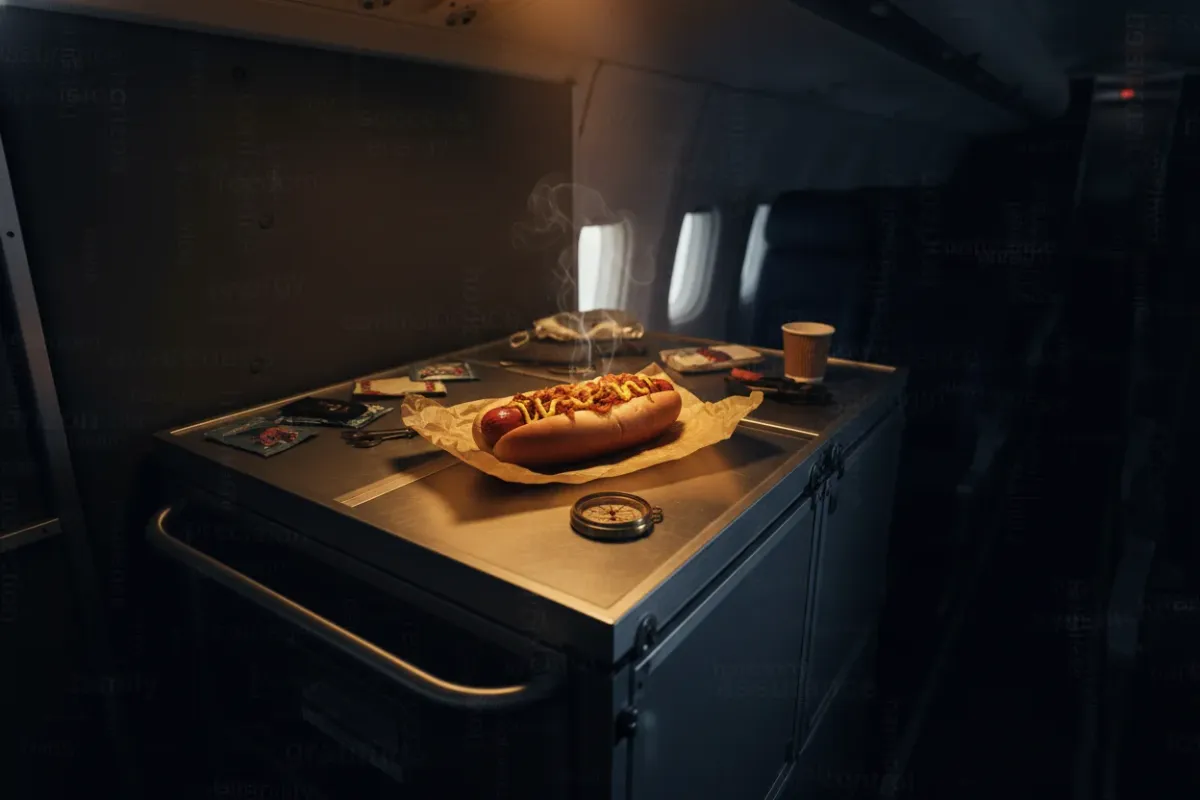
The "Bastardo" is a gourmet take on a familiar comfort food: a hot dog elevated with premium ingredients and offered as a limited-edition item in select cabins. Rather than competing on luxury heritage, the product leans into approachability. The framing is intentional — less formal ceremony, more recognizable indulgence served at altitude.
For an industry where first-class menus have historically been built around scarcity and prestige, the choice is notable. It reflects a wider trend in which carriers test whether passengers value novelty and warmth over rigid formality. The "Bastardo" sits squarely in that experiment.
Why Comfort Food Is Entering Premium Cabins
Several operational and commercial factors make comfort food attractive to airline catering teams. Hot meal logistics at altitude are constrained by galley equipment, reheat times, and the well-documented effect of cabin pressure and dry air on taste perception. Studies on in-flight dining have repeatedly found that passengers perceive salt and sweetness differently above 30,000 feet, which is one reason airlines favor robustly seasoned dishes.
A product like the "Bastardo" addresses these constraints directly:
- Simplified galley handling. Fewer components reduce preparation complexity during short service windows.
- Consistent taste perception. Bold, familiar flavors hold up better against the muted palate caused by cabin conditions.
- Brand differentiation. A signature comfort item gives a carrier a distinct, shareable identity that standard fine dining does not.
The shift does not replace traditional premium catering so much as broaden it. Carriers increasingly treat the menu as a storytelling tool rather than a fixed hierarchy of luxury.
What It Signals for the Passenger Experience
The introduction of a signature snack is a small data point, but it fits a measurable pattern across the industry. Premium cabins are being repositioned around personalization and comfort rather than uniform formality. The same logic that drives on-demand dining, lie-flat seating, and curated lounge menus also drives a willingness to serve an elevated hot dog without apology.
For travelers, the practical takeaway is straightforward: the definition of "premium" is expanding. Recognition and quality of ingredients now compete with tradition as markers of a high-end cabin. For carriers, a limited-edition item carries low operational risk while generating outsized attention.
It is worth distinguishing experience-level changes from safety-level operations. Catering choices have no bearing on airspace status, route planning, or operational risk — domains where FlySafe focuses its monitoring. The "Bastardo" is a product and brand decision, and it should be read as such.
The Broader Context of Airline Identity
In a competitive market, carriers differentiate on the elements passengers actually remember. A distinctive snack, a recognizable cabin design, or a consistent service philosophy can shape brand perception more durably than incremental seat upgrades. SWISS positioning a comfort item in its premium offering is a calculated bet that warmth and novelty resonate with modern travelers.
Whether the "Bastardo" becomes a permanent fixture or remains a limited run, it illustrates a quiet evolution in aviation hospitality: the movement from prestige-by-scarcity toward prestige-by-experience.
Key Takeaway
The SWISS "Bastardo" is a modest but telling example of how airline dining is changing — less ceremony, more comfort, and a clearer focus on what passengers genuinely enjoy. It signals that premium cabins are being reimagined around experience rather than tradition alone.
While catering trends shape how a flight feels, they sit apart from the operational and airspace factors that determine how a flight is planned and flown. For travelers and aviation professionals who track the latter, FlySafe provides aviation risk intelligence built exclusively on publicly available, independently verifiable data. Readers interested in the operational side of flying can explore how flight tracking apps support airspace risk monitoring and how route changes signal shifting airspace conditions.
Analysis based on publicly available data only. For aviation risk intelligence and airspace monitoring, visit FlySafe.
- Cabin pressure and dry air measurably dull taste perception above 30,000 feet, which is why bold, familiar flavors like a gourmet hot dog actually perform better in-flight than delicate fine-dining dishes.
- SWISS's "Bastardo" reflects a broader industry shift: premium cabins are moving away from uniform formality toward personalization, where quality ingredients and recognizable comfort now rival traditional luxury as markers of a high-end experience.
Powered by B1KEY
Live tools behind the analysis.
The signals FlySafe writes about are also published live — continuously verified by the Sentinel pipeline.
Information is accurate as of the publication date. FlySafe uses exclusively publicly available data.